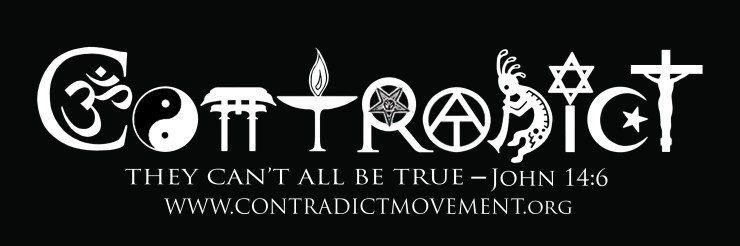
Why did you use a crucifix in Contradict?

crucifixAt least a few times a year I receive a question asking me why I chose to use a crucifix in my Contradict logo.  Protestant Christians sometimes avoid Contradict because to them the crucifix represents Roman Catholicism, a belief system that openly teaches that our works are involved in our salvation, a doctrine wholly opposed by the Reformation that led to the birth of Protestantism.

These Protestants are expressing a popular understanding, but I think it is incorrect.  Many people have come to associate the crucifix to specifically represent Roman Catholicism, but I see no reason why it must only represent Roman Catholicism.  Many people don’t even know that there are Protestants who think the crucifix shouldn’t be used by Protestants in fear of mingling Protestant doctrine with Roman Catholic teachings.

I come from a conservative Lutheran background theologically and am a member of the Lutheran Church – Missouri Synod.  I was never taught such a distinction concerning the use of a crucifix.  Lutheran churches I attend typically have a cross that does not have Jesus hanging on it, however, some congregations in my denomination do have Christ on the cross in their sanctuaries.  I hear that in Europe, it’s most likely that Lutheran churches will have a crucifix.

For Protestants and Roman Catholics who have the crucifix, it’s a reminder of what Christ suffered for us to pay for our sins.  It falls in line with what Paul said about resolving to only preach and know “Christ and him crucified.”  Of course Paul also explains that “Christ died for our sins, was buried, and raised on the third day.”  Roman Catholics and Protestants alike who display crucifixes instead of empty crosses, confess that Christ was also raised from the dead, and that in fact he is not suffering anymore!  Having Jesus on the cross in no way implies that he is still suffering, or is dead and still buried, just as an empty cross doesn’t signify that he is risen.

Here’s a quote from Luther and how he viewed the use of a crucifix:

“It was a good practice to hold a wooden crucifix before the eyes of the dying or to press it into their hands.40 This brought the suffering and death of Christ to mind and comforted the dying. But the others, who haughtily relied on their good works, entered a heaven that contained a sizzling fire. For they were drawn away from Christ and failed to impress His life-giving passion and death upon their hearts.”

Luther’s works, vol. 23 : Sermons on the Gospel of St. John: Chapters 6-8

As to my reasoning for picking a crucifix, I chose a crucifix to be used in the Contradict logo because it shows that Jesus died for our sins.  That message is not conveyed with the word Contradict, but with an image of Christ on the cross at the end of Contradict that message is more likely implied.  In our day and age, the cross has lost its punch.  Few people know how brutally torturous the cross was as an execution device. Having an image of Christ on the cross reminds us that the cross isn’t just a fashion symbol, or piece of jewelry, or an expression of art, which it has far too often become in our modern society.

I also don’t think many non-Christians are aware of a Roman Catholic and Protestant divide over the crucifix.  We are divided not over the use of a crucifix, or the message that it conveys that Christ died for our sins, but instead we are divided over the doctrines that the Roman Catholic Church has rejected, namely that we are saved solely by the work of Christ alone.    For those who are aware, or not aware, of this unnecessary divide, they will certainly see from the Contradict Movement website, my blog, Reconnect podcast, or YouTube channel, or my book, Contradict – They Can’t All Be True, that I am not teaching Roman Catholic doctrine.

I also like that the last image of Contradict is one of Christ dying for our sins.  All Protestants will confess that Christ’s death is central to the Gospel, as is the resurrection.  So I don’t see this image being counter to the message of Scripture, but instead a reminder of the depth of our depravity, that the Lord of heaven had to take on flesh in the person of Jesus Christ and bear the full weight of our sins through an agonizing death on the cross of Calvary in order that we might have forgiveness of sins.

Finally, and not as important as conveying that Christ paid for all of our sins, I think the crucifix is more aesthetically pleasing (artistic) in the Contradict logo than an empty cross.
Contradict Black Final
 Order stickers, tracts, or books at Contradict Movement.

86. The Biotech Revolution

>> Click Here to Listen to the Episode! <<
(Right click and “save as” to download the file)

Or Listen on iTunes.

biotech

Jonathan Rutherford shares various advancements in biotechnology and where these new discoveries can lead humanity, both positively and negatively.  Biotechnology is changing so quickly that society will be drastically different withing a decade or two.

He closes the episode with some great advice for Christians from Scripture as we respond and adapt to our ever changing world.  He also gives some practical advice on how the Church can help influence and guide society and the world through the Biotechnology Revolution.

85. Christianity in Five Verses

>> Click Here to Listen to the Episode! <<
(Right click and “save as” to download the file)

Or Listen on iTunes!

 
Aaron Puls shares the Doctrine of Justification with Andy Wrasman and Jonathan Rutherford, using Dr. Rod Rosenbladt’s sermon “Christianity in Five Verses” as a guide.

Justification is God’s declaration that sinners are innocent on account of Christ’s death on the cross that atones for all of our sins.  This is pure gift!  We are declared innocent, though we are guilty.  Justice is still served, since the penalty for our sins were paid in full by Jesus of Nazareth.

Objective Justification is a doctrine that states that Jesus died for all sins, past, present, and future, for all people.  Individual receives the benefits of Christ’s saving work through faith, which is the doctrine of Subjective Justification.  This means that though Jesus died for everyone only those who receive the grace he won for us through faith are saved.

Another important doctrine is Sanctification.  Unlike Justification, which is instantaneous, and a declaration of innocence for the sinner, Sanctification is a process.  It is the process of becoming holy.  Though we are declared holy, it does not mean that we are now sinless.  In Justification, we are declared just though we are sinners.  At the exact moment of Justification, the process of Sanctification begins, and it carries on throughout the life of the believer, completed at death, at which time the sinful nature is gone for the believer, once and forever.

Sadly, many Christians look to their Sanctification as the assurance of their Justification.  This is a mistake which plagues the believer with doubt of salvation, leading to utter despair or self-righteousness.  The mingling of Sanctification and Justification points the believer away from Christ’s work inward to each man’s own heart and works.

Aaron plays video clips from John MacArthur, Francis Chan, N.T. Wright, and John Piper.  Do they get Justification right?  Or do they mingle Sanctification and Justification?  Do they point us to Christ for assurance of salvation, or do they point us to ourselves?

Show Links

Dr. Rod Rosenbladt’s “Christianity in Five Verses” Sermon

Dr. Rod Rosenbladt’s “The Gospel for Those Broken by the Church” Sermon

“The Christian Life is Like a Draft of Guinness Stout”

Reconnect Episode 19: “How Do I Know I Am A Christian?”

Contradict Black Final
Financially support Reconnect by ordering a sticker, tracts, or book at Contradict Movement.

The Christian Life is Like a Draft of Guinness Stout

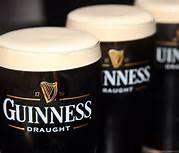
guinnessIf you pour a glass of Guinness Stout, you will see some very dark beer.  Blacker than Black.  If poured properly you will have a nice, thin layer of white head on top.  This whiteness is pure as snow in comparison to the depths of the darkness below.
How is this like the Christian life?

Our lives are dark and stained with sin.

In faith in Christ, when God the Father looks down at us, He does not see the darkness of our lives.  The darkness that demands his wrath.  Instead, He sees the cleanliness in the pure whiteness of the righteousness of his Son, Jesus, that covers us and justifies us as being in a right relationship with God.

This simple analogy has left out any long and detailed explanations of sin and the effects of sin.  It has assumed that everyone understands that Jesus is God and that the Father is God, and that there is another person in the nature of God, and he is the Holy Spirit.  These three persons are distinctly different, but still there is only one God.  Now I’m probably confusing matters worse to state this, but I also didn’t give a definition for righteousness or explain how a loving God has to punish sinners, because he is also just and holy.  I didn’t explain or prove any of this from the Bible, science, philosophy, or logic.  This analogy simply states that our lives are dark and deep with evil, wholly depraved, but that nonetheless, the depths of our depravity are covered and made clean through the perfect life and work of Jesus.  That’s why I can say that . . .

The Christian Life is like a Draft of Guinness Stout!

84. Muslims in America and One Nation Under Which God?

>> Click Here to Listen to the Episode! <<
(Right click and “save as” to download the file)

Or Click Here to Listen in iTunes!

american-flag-hijab

Part I – The Majority of Muslims in America are Concerned (Fearful?) about Islamic Extremism

I read a recent article by Ken Chitwood, a guest on episode 16 of Reconnect, entitled, “What Does God Require of Us Amid Rising Islamophobia?” that exhorts us to defend the rights of Muslims, reach out to Muslims with compassionate friendship, and to be humble knowing that we cannot rebuild the brokenness of the world on our own (namely, we need God to wholly fix the world).

These points are very good reminders to us for what we need to do and I affirm them throughout the episode, yet with caution.

In the article Ken states, “A recent study by Public Religion Research Institute shows that people who interact with Muslims — even those who have just had a few conversations in the past year — hold much more positive views of Muslims and refugees.”

It seems to be implied that if more Americans just knew Muslims personally and had more knowledge of Islam they wouldn’t be as fearful of Islamic extremism.  However, according to a 2011 Pew Research study the majority of Muslims in the United States are concerned (is that the same as fearful?) about the rise of Islamic extremism within America, as well as a large number of Muslims in America (231,000) that say suicide bombings and violence against citizens can sometimes be justified to defend Islam, while ONLY 33,000 Muslims in America say such attacks on citizens is often times justified.

The report also says, ““A significant minority (21%) of Muslim Americans say there is a great deal (6%) or a fair amount (15%) of support for extremism in the Muslim American community.” This means that one in five Muslim Americans say there is a great deal or fair amount of support for extremism in the Muslim American community? Really? So about 660,000 Muslim Americans say there is a great deal or fair amount of support for Islamic extremism in the Muslim American community.

To support this perception within the Islamic community, the study also showed that 5% of the Muslims in America are favorable of al-Qaeda. That’s 165,000 American Muslims who are favorable of al-Qaeda.

Since such answers come from the Muslims in America, it helps explain why there is a fear of Islam in America? I don’t think it is an irrational fear based on the numbers, especially when we ask how many would legitimately tell the truth about supporting al-Qaeda and suicide bombings while living in America. Then consider that the statistics on these points in Islamic states is extremely high, and the fear is very much understood among Americans. It shouldn’t be dismissed as white America simply not knowing Muslims or Islam, when the Islamic community in America itself has a majority concern for the rise of Islamic extremism in America too!

But the Christian is exhorted to act justly, love mercy, and walk humbly as Ken reminds us in his article.  How do we then respond if we are fearful, or simply concerned about Islamic extremism as many of the Muslims in America are also concerned?  Many of the examples Ken gives, we should follow, but I don’t think we ALL should follow them, depending on our family duties and responsibilities, which I explain in this first segment.

Part II – In God We Still Trust

I read quotes from the early founding fathers, statesmen, and presidents of America!  If America is a nation under God, which God are we under?  Wouldn’t the founding fathers’ words best tell us?

The quotes are compiled by Dr. Richard G. Lee in his book, In God We Still Trust.
As usual, both of these parts are connected to sharing the good news of Jesus Christ.

Show Links

Ken’s Article

Ken’s Reconnect Episode

August 30th, 2011 Pew Research Center Study on the Views of American Muslims

January 206 – New Estimate of Muslim Population in America by Pew Research Center

PolitiFacts’s “Is Donald Trump’s Executive Order a Muslim Ban?”

Contradict Movement