How do we know who God is?

How do we know who God is?

The Bible reveals who God is to mankind.  It contains the history of God’s interaction with humanity from his creation of the first human beings to his direct entering into the world through the second person of the Trinity, Jesus Christ.

Two kinds of revelation

The Bible teaches that we do not have the ability to search and discover who God is.  It is not as if we can turn over a rock and find God!  If we are to have any knowledge of God at all, he must first reveal it to us.  This revealing work on God’s part is called revelation.  From the Bible we see that God has revealed himself to us in two different ways.  The first method of revelation which is available to all of mankind is called general revelation, or natural knowledge.  The other method of revelation is called special revelation, or revealed knowledge.   Both of these forms of revelation grant humanity information about God, however, only one of these can tell us who God is, what he requires of us, what he does and has done for us, and how to have a relationship with him.

General Revelation or Natural Knowledge

Through general revelation, also called natural knowledge, God has revealed himself to mankind through what he was created.  This means that through our knowledge and experiences within the world around us, we can glean information, or knowledge, about who God is.  The names given to this type of revelation can be useful to help remember what type of information we can gain from this type of revelation and where we can look to attain it.   Using the name natural knowledge, remember that this type of revelation is knowledge that mankind can obtain from nature.  Using the other name for this classification of God’s revealing work, general revelation, reminds us to what extent we can gain information about God from nature – it’s only general information, there’s a God, and he’s all-powerful!

From looking at the design, order, consistency, laws of nature, purpose, and aesthetics of nature and life, one should be able to come to the conclusion that there is in fact a designer, a creator of the universe and the cosmos, that there is a divine, eternal being – the cause of the effect we see in motion.  However, as the Bible explains, even though God’s existence is evident from what he has made, humanity regularly turns from this knowledge to worship and deify aspects of the created order or to worship idols made by the hands of men.

A passage of scripture commonly used to support general revelation is Romans 1:18-25.

“The wrath of God is being revealed from heaven against all the godlessness and wickedness of men who suppress the truth by their wickedness, since what may be known about God is plain to them, because God has made it plain to them. For since the creation of the world God’s invisible qualities—his eternal power and divine nature—have been clearly seen, being understood from what has been made, so that men are without excuse. For although they knew God, they neither glorified him as God nor gave thanks to him, but their thinking became futile and their foolish hearts were darkened.  Although they claimed to be wise, they became fools and exchanged the glory of the immortal God for images made to look like mortal man and birds and animals and reptiles. Therefore God gave them over in the sinful desires of their hearts to sexual impurity for the degrading of their bodies with one another. They exchanged the truth of God for a lie, and worshiped and served created things rather than the Creator—who is forever praised. Amen.” – Romans 1:18-25

Special Revelation, or Revealed Knowledge

Looking at a tree, the sunset, or rise, the human anatomy, or virtually any aspect of this world, one could easily come to the conclusion that there is a God. But who is that God?  What is his, or her, or its name?  Does this God love us, hate us, want to have us over for dinner, to get to know us, or does this God already know, he just wants a relationship with us?  Or maybe God is in all of us in such a manner that we are constructed with the divine essence itself, meaning we are God?  Does this God demand anything of us – throw a virgin into a volcano for instance!  None of the answers to these questions can be derived from general revelation alone.  All general revelation does is condemn us, leaving us with no excuse when we stand before our maker on the Day of Judgment as Paul wrote to the Romans.

This is why we must have special revelation, also known as revealed knowledge.  This type of revelation is God’s direct revelation of himself to mankind through his interaction with us in history recorded in the Bible and through the historical figure, Jesus Christ,

A commonly used verse from the Bible to support special revelation is Hebrews 1:1-2.

“In the past God spoke to our forefathers through the prophets at many times and in various ways, but in these last days he has spoken to us by his Son, whom he appointed heir of all things, and through whom he made the universe.” – Hebrews 1:1-2
Stereomud – Show Me

Back in 2001, maybe 2001, the band Stereomud was on heavy radio rotation in Nashville with their song, “Pain.”  I saw them play at the now closed rock club, 328, in downtown Music City.  They played with Saliva, Lifer, and Systematic.  Most of these bands and others coming out of the nu-metal, rap-rock genre didn’t go further than the small rock club scene, but I got a couple CDs from each of these bands.  Yesterday on my full library shuffle, I was taken back to early 2000 when Stereomud’s “Show Me” entered the cycle.

Check out a sampling of the lyrics to this song:

Please don’t forget me I’m out here trying to find you…

Show me some kind of light I can barely see it
Don’t want to think that it’s hopeless
Show me some kind of light I can barely see it
Don’t want to think I’m lost

Everytime I left It was so far away
No I never thought that it would be like this
Wish I could thank you for the patience that you gave me
It’s all I, I can do so don’t give up on me
Hope you know it’s your faith that’s guiding me

Please don’t forget me I’m out here trying to find you…

Show me some kind of light I can barely see it
Don’t want to think that it’s hopeless
Show me some kind of light I can barely see it
Don’t want to think I’m lost

Please don’t forget me

Show me some kind of light I can barely see it
Don’t want to think that it’s hopeless
Show me some kind of light I can barely see it
Don’t want to think I’m lost

I’m curious who do you think he is singing about?  Does the style of the music, the tone of singer, or the content of the lyrics fit a crying out for an ex-lover, distant parent, lost friend, or other human guidance, or does this seem more like a calling out for a divine hand, a divine light, a “word from above?”

It made me think of the lyrics of one of my favorite bands, Godsmack.  Many of their songs cry out to someone or something “to make me believe,” “to forgive me,” “to shine down to give me a chance to feel you,” “to give me a reason to pray,” “that I still believe in immortal love and I know that there is someone who is up above,” and the need to “re-align,” “change,” “speak the truth,” with an entire song centered on the question, “What if?”

I firmly believe that God has revealed himself through what he has created, as Romans 1:20 states, that from “the creation of the world God’s invisible qualities—his eternal power and divine nature—have been clearly seen, being understood from what has been made.”  In Christian doctrine this type of revelation is called Natural Knowledge or General Revelation.  I think songs like the ones from bands like Stereomud and Godsmack ask the questions that they ask and have themes transcend the natural because God has put his fingerprints all over his creation, though all men don’t acknowledge, they know there is more, which is why we all seek and have a god in our life, rather it is a God made in the image of man or creation, humanism, fame, money, or the true God of the universe as he has revealed himself directly through the person of Jesus Christ.

This isn’t for everyone, because for some Christians listening to certain songs might lead them to sin, but I do think that the spiritual themes that arise from the artists and poets of our society are good starting points for “religious” talk, for discussing God and the Gospel of Jesus Christ.  If you can take in the words and products of non-Christians without being led away from Christ or into sin, then by all means, listen, observe, but always filter through discernment using God’s Word, and pray for opportunities to share the Gospel.

Check out Christianity Today’s movie review section on-line.  They have great discussion questions at the end of all their reviews which can give some helpful examples of how we can engage secular culture and redeem it and point it towards Christ.  This is exactly what Paul did as he mingled in the marketplace of Athens in Acts 17.

Let me know what you find?  And if this proves helpful?


Who is God? #3 – The Father

In the previous articles in this series, I have shown that God has revealed himself to be three in person, but one in nature.  The persons of the Trinity are the Father, the Son, and the Holy Spirit.  Who is the Father?

The Father
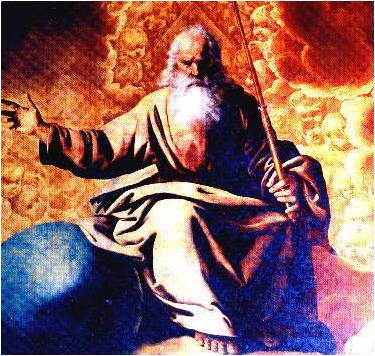
Does God, the Father, really have a big white beard, and look like an old grandfather?

Have you ever stopped and thought about it?  What image comes to mind when you think of the Father? Forget the big white beard, when you picture the father, what color of skin does he have?  Do you even picture a body? Does he have a body?  Is it wrong to picture God this way?

I think most people picture a human father figure when they hear mention of God the Father, and God the Son.  This makes sense because we are taking the experiences we know from our human families and applying them all to God.  When it comes to God the Holy Spirit, however, we usually don’t have a mental image of a body in our heads.  Often times, we don’t picture anything, which is rightfully so, because spirits are not objects.  But in all honesty, all three, God the Father, Son, and Holy Spirit, are by nature Spirit, and do not have bodies.  John 4:24 says, “God is Spirit.”  However, Jesus, the Son, assumed a human nature.  So Jesus, now and forevermore has a human body.  The Father and the Holy Spirit do not.

Malachi 2:10 says, “Have we not all one Father? Did not one God create us?”

James 1:17-18 says, “Every good and perfect gift is from above, coming down from the Father of the heavenly lights, who does not change like shifting shadows. He chose to give us birth through the word of truth, that we might be a kind of firstfruits of all he created.”

Many Christians can easily recognize that God as a Father is good, that he does give to us generously, that he cares for us, and that he meets our needs.  But for some Christians, and for many who are not Christians, this is hard to understand because they did not have an earthly father, or their earthly father was abusive, or negligent, or unloving, or distant.  If that happens to be you, I highly recommend Donald Miller’s book, Father-Fiction, which was previously entitled To Own a Dragon.

Who is God #2

The Doctrine of the Trinity

Scripture provides two truth statements concerning who God is: “There is only one God” and “That one God exists in three persons, the Father, the Son, and the Holy Spirit”.   These two statements appear to contradict each other, but they do not contradict.  This is called a paradox.  If the teaching is expressed as God is one, but not one; God is three, but not three, then this would be contradictory teaching, because one must be one.  One cannot not be one! Three must be three.  Three cannot not be three!

There isn’t a contradiction with the Trinity because essentially it is taught that God is one “what” and three “who’s”.  The “what” is the divine substance, or essence, of God.  Substance is the deity.  There are three persons, the Father, the Son, and the Holy Spirit, who are one in substance.  It could be expressed as saying that God is one (one divine substance) in three persons.  The word person does not refer to being human either.  Person simply refers to someone, not something, who is distinct and recognizable with a self-conscious, able to think and act on his own.  It is with this understanding of “person” that the doctrine of the Trinity states that God is three in person and in substance.

The following video helps to illustrate this doctrine with citations to many verses from the Bible.

Who is God #1

Some people don’t believe in God.  Some people believe in many gods.  Some people believe in only one God, but they disagree on whom that God is.  Others take the stance that there’s no way to know for sure if there is a God or not.

A broad definition of “god”

Martin Luther defined a god as whoever or whatever we fear, love, and trust above all things.  According to this definition even people who claim to believe in the God revealed in the Bible probably have other gods in their life.  It can become very easy for anyone to put trust in our own abilities and provision instead of the one true God.  If people believe in the Christian God and do this, they are not rejecting their belief in God; they are placing an idol alongside God, or above God.  It can become very easy to begin to pursue money, making decisions and living for the pursuit of financial gain, or to fear and seek the approval of men above God.   Luther’s definition is good for generically defining a “god.”  The goal at hand is to show how God has revealed himself to humanity in the Bible.

God revealed in the Bible      

The God in the Bible is clearly revealed to be one.  One of the most cited verses to support this doctrine comes from the Shema, an early creed of Israel, found in Deuteronomy 6:4, “Hear, O Israel: The LORD our God, the LORD is one.”  At the same time God is revealed to be three persons, the Father, the Son, and the Holy Spirit.  All three of these persons are called God in the Bible.  Malachi 2:10 says, “Have we not all one Father? Did not one God create us?”  Matthew 6:9, Luke 11:1-13, 2 Peter 1:17, and Colossians 1:2-3 all show that the Father is God.  Matthew 3:16-17 clearly shows the Father proclaiming Jesus to be his son, “As soon as Jesus was baptized, he went up out of the water. At that moment heaven was opened, and he saw the Spirit of God descending like a dove and lighting on him.  And a voice from heaven said, “This is my Son, whom I love; with him I am well pleased.”  In addition to numerous other verses that refer to Jesus as God, Titus 2:13 contains a clear statement by Paul that Jesus is God by saying, “while we wait for the blessed hope—the glorious appearing of our great God and Savior, Jesus Christ.”  The Holy Spirit is referred to as the Spirit of God or the Spirit of the Lord numerous times throughout Scripture and is referred to as a separate person with the Father and the Son such as in 2 Corinthians 13:14, “May the grace of the Lord Jesus Christ, and the love of God, and the fellowship of the Holy Spirit be with you all.”

From these verses and numerous others it can be concluded that there is only one God.  Yet the Father is God, Jesus is God, and the Holy Spirit is God.  Therefore, all three persons must be the one God.

Do Muslims and Jews worship the same God as Christians?

Christianity – One God, Three Persons

Judaism and Islam – One God, One Person

Christianity – Jesus is God.
Islam – Jesus is a prophet.
Judaism – Jesus is a false-prophet.