How Has God Revealed Himself to Us?

The following is a brief outline of Chapter 2 of Called to Believe: A Brief Introduction to Christian Doctrine, edited by Steven P. Mueller.

How Has God Revealed Himself To Us?

Preliminary Questions:

How does a person come to know God?

If there is a God, can humans know him or know what he is like?

What does God expect of me?

Does God have a plan for me?

Can a person ever be sure that his or her answer is the right one? 

The Biblical Idea of Revelation

God is not hiding and we uncover him or discover him. 

Instead, God searches for us. 

Luke 15 – What is lost?  Who is lost? Who is searching? 

How Does God Make Himself Known To Us? 

Scripture Shows That God Makes Himself Known To Us In Two Ways: Natural Knowledge and Revealed Knowledge. 

Natural Knowledge (General Knowledge)

Psalm 19:11 – “The heavens declare the glory of God,
    and the sky above proclaims his handiwork.”

Psalm 148 – The whole chapter speaks to Natural Knowledge.

Psalm 14:1 – “The fool says in his heart, “There is no God.”

Romans 1:18-32 – “For the wrath of God is revealed from heaven against all ungodliness and unrighteousness of men, who by their unrighteousness suppress the truth. 19 For what can be known about God is plain to them, because God has shown it to them. 20 For his invisible attributes, namely, his eternal power and divine nature, have been clearly perceived, ever since the creation of the world, in the things that have been made. So they are without excuse. 21 For although they knew God, they did not honor him as God or give thanks to him, but they became futile in their thinking, and their foolish hearts were darkened. 22 Claiming to be wise, they became fools, 23 and exchanged the glory of the immortal God for images resembling mortal man and birds and animals and creeping things.

24 Therefore God gave them up in the lusts of their hearts to impurity, to the dishonoring of their bodies among themselves, 25 because they exchanged the truth about God for a lie and worshiped and served the creature rather than the Creator, who is blessed forever! Amen.

26 For this reason God gave them up to dishonorable passions. For their women exchanged natural relations for those that are contrary to nature; 27 and the men likewise gave up natural relations with women and were consumed with passion for one another, men committing shameless acts with men and receiving in themselves the due penalty for their error.

28 And since they did not see fit to acknowledge God, God gave them up to a debased mind to do what ought not to be done. 29 They were filled with all manner of unrighteousness, evil, covetousness, malice. They are full of envy, murder, strife, deceit, maliciousness. They are gossips, 30 slanderers, haters of God, insolent, haughty, boastful, inventors of evil, disobedient to parents, 31 foolish, faithless, heartless, ruthless. 32 Though they know God’s righteous decree that those who practice such things deserve to die, they not only do them but give approval to those who practice them.”

Romans 2:14-15 – “For when Gentiles, who do not have the law, by nature do what the law requires, they are a law to themselves, even though they do not have the law. 15 They show that the work of the law is written on their hearts, while their conscience also bears witness, and their conflicting thoughts accuse or even excuse them.” 

Natural Evidence for the Existence of God

  1. Ontological Argument

  2. Cosmological Argument

  3. Teleological Argument

  4. Moral Argument

  5. Experiential Argument

  6. Historical Argument

Natural Knowledge reveals that God exists, but it does not tell us who God is.  It does not lead to a loving relationship with God. 

It leaves us with a guilty conscience (Romans 1:20, 2:15). 

Revealed Knowledge (Special Revelation)

Hebrews 1:1-3 – “Long ago, at many times and in many ways, God spoke to our fathers by the prophets, but in these last days he has spoken to us by his Son, whom he appointed the heir of all things, through whom also he created the world. He is the radiance of the glory of God and the exact imprint of his nature, and he upholds the universe by the word of his power. After making purification for sins, he sat down at the right hand of the Majesty on high.”

John 14:1-11 – ““Let not your hearts be troubled. Believe in God; believe also in me. In my Father’s house are many rooms. If it were not so, would I have told you that I go to prepare a place for you? And if I go and prepare a place for you, I will come again and will take you to myself, that where I am you may be also. And you know the way to where I am going.” Thomas said to him, “Lord, we do not know where you are going. How can we know the way?” Jesus said to him, “I am the way, and the truth, and the life. No one comes to the Father except through me. If you had known me, you would have known my Father also. From now on you do know him and have seen him.”

Philip said to him, “Lord, show us the Father, and it is enough for us.” Jesus said to him, “Have I been with you so long, and you still do not know me, Philip? Whoever has seen me has seen the Father. How can you say, ‘Show us the Father’? 10 Do you not believe that I am in the Father and the Father is in me? The words that I say to you I do not speak on my own authority, but the Father who dwells in me does his works. 11 Believe me that I am in the Father and the Father is in me, or else believe on account of the works themselves.”

John 17:3-21 – “And this is eternal life, that they know you, the only true God, and Jesus Christ whom you have sent. I glorified you on earth, having accomplished the work that you gave me to do. And now, Father, glorify me in your own presence with the glory that I had with you before the world existed.

“I have manifested your name to the people whom you gave me out of the world. Yours they were, and you gave them to me, and they have kept your word. Now they know that everything that you have given me is from you. For I have given them the words that you gave me, and they have received them and have come to know in truth that I came from you; and they have believed that you sent me. I am praying for them. I am not praying for the world but for those whom you have given me, for they are yours. 10 All mine are yours, and yours are mine, and I am glorified in them. 11 And I am no longer in the world, but they are in the world, and I am coming to you. Holy Father, keep them in your name, which you have given me, that they may be one, even as we are one. 12 While I was with them, I kept them in your name, which you have given me. I have guarded them, and not one of them has been lost except the son of destruction, that the Scripture might be fulfilled. 13 But now I am coming to you, and these things I speak in the world, that they may have my joy fulfilled in themselves. 14 I have given them your word, and the world has hated them because they are not of the world, just as I am not of the world. 15 I do not ask that you take them out of the world, but that you keep them from the evil one. 16 They are not of the world, just as I am not of the world. 17 Sanctify them in the truth; your word is truth. 18 As you sent me into the world, so I have sent them into the world. 19 And for their sake I consecrate myself, that they also may be sanctified in truth.20 “I do not ask for these only, but also for those who will believe in me through their word, 21 that they may all be one, just as you, Father, are in me, and I in you, that they also may be in us, so that the world may believe that you have sent me.”

John 20:31 – “But these are written so that you may believe that Jesus is the Christ, the Son of God, and that by believing you may have life in his name.”

Revealed Knowledge is necessary for us to know who God is and what he has done for us for our salvation.

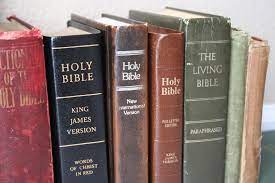
Reading God’s Word – 4 Principles and 10 Steps

First – What does God’s Word say about reading God’s Word?
Second – What are some proper steps to reading and understanding a Bible passage?

Four Principles for Reading God’s Word

  1. Since the Bible is God’s Word, it must be spiritually discerned. 

    1 Corinthians 2:12-14 – “Now we have received not the spirit of the world, but the Spirit who is from God, that we might understand the things freely given us by God. 13 And we impart this in words not taught by human wisdom but taught by the Spirit, interpreting spiritual truths to those who are spiritual.14 The natural person does not accept the things of the Spirit of God, for they are folly to him, and he is not able to understand them because they are spiritually discerned.”
  2.  Pray for wisdom in understanding God’s Word before reading and while reading!

James 1:5 – “If any of you lacks wisdom, let him ask God, who gives generously to all without reproach, and it will be given him.” 

 3. All Scripture testifies about Jesus, so seek Jesus in every text you read. 

John 5:39-40 – “You search the Scriptures because you think that in them you have eternal life; and it is they that bear witness about me, 40 yet you refuse to come to me that you may have life.” 

4. Scripture interprets Scripture.

1 Corinthians 14:32 – “The spirits of prophets are subject to prophets.”

Ten Steps to Reading and Understanding a Bible Passage

  1. Pray, asking for wisdom and to see Jesus in the passage. 

  2. Biblical and Historical Setting
    • Who wrote it?
    • Who was it written to? 
    • When was it written?
    • Why was it written?
    • What historical people, dates, and places are named in the passage?

  3. Immediate Literary Context
    • What precedes the passage?
    • What comes after the passage?
    • How does the passage fit into this immediate context?
    • What purpose does the passage have within the immediate context?

  4. Historical and Cultural Context
    • What historical events are explicitly or implicitly mentioned in the passage?
    • What social and cultural norms are explicitly or implicitly mentioned in the passage?


  5. Doctrines
    • What doctrines are directly mentioned in the passage?
    • What doctrines are indirectly mentioned in the passage?


  6. Parallel Passages
    • What passages in the Bible contain the same or similar words or phrases?
    • What passages in the Bible mention the same people, places, or events?
    • What passages in the Bible reference the same doctrines?
    • What passages in the Bible are being quoted, referenced, or alluded?

  7. Law Application
    • What commands, demands, or expectations are directly stated in the passage?
    • What commands, demands, or expectation are indirectly implied in the passage?
    • How do those commands, demands, or expectations apply to myself and those in my life? 
    • What consequences for sin are named in this passage?
    • What is stated in this passage about mankind’s sinful condition? 

  8. Gospel Application
    • What blessings and good promises of God are directly stated in the passage?
    • What blessings and good promises of God are indirectly implied in the passage?
    • How do these blessings and good promises of God apply to myself, those in my life, and to all people who have faith in Christ? 

  9. Translations
    • Compare translations of the same passage. 
    • What is similar or the same within all of them? 
    • What is different and can different implications be drawn from these variant translations? 
    • Look at the Greek and Hebrew readings of the passage to see what is happening in the sections of the passage that have variant translations.  Likely that section is difficult to translate into English, either due to words having multiple meanings in Greek and Hebrew or due to a part of speech or method of emphasis within the language that is not readily available in English. 

  10. Word Studies
    • Pick out a few words that seem important or central to the passage and see where else they appear in Scripture and how that word is used throughout the Bible. 
    • Use a Hebrew or Greek interlinear Bible to discover what the key or central words in Greek are and conduct a word study using a lexicon.  See where else in Scripture that word appears and how it is translated differently or the same across the whole of God’s Word. 
    • Does one author use this word in one sense and another author use it in a different sense?  Do these findings given guidance in understanding the meaning and use of the word in the passage at hand? 
    • How was this word used in secular Greek culture and writings? 

God’s Word – From Scripture Alone

God’s Word

Three Forms of the Word

  • Personal Word (Jesus as God’s Word to Us)
  • Spoken Word (Prophets, Apostles, Pastors, Teachers, All Christians – in Preaching, Evangelism, Conversation)
  • Written Word (Definitive instances of written proclamation by prophets and apostles)

  • The Written Word serves the spoken Word which delivers the personal word.

Three Forms – To Be Distinguished but not to be separated.

Scripture cannot be broken.

John 10:35 – “Scripture cannot be broken”

Jesus said this initially in reference to the OT.
Nothing in the OT can be broken by the NT.
Any future commentary or books cannot go against OT or NT.

Scripture came from the Holy Spirit – and it originated with God, not with man.

2 Timothy 3:16 – “All Scripture is God-breathed”  Parallel to Gen 2:7 – “Then the LORD God formed a man from the dust of the ground and breathed into his nostrils the breath of life, and the man became a living being.”

2 Peter 1:20-21 – “Above all, you must understand that no prophecy of Scripture came about by the prophet’s own interpretation of things.  For prophecy never had its origin in the human will, but prophets, though human, spoke from God as they were carried along by the Holy Spirit.” 

Acts 4:25 – “You spoke by the Holy Spirit through the mouth of your servant, our father David: “‘Why do the nations rage and the peoples plot in vain?”

They were compelled, even commanded, to publically preach God’s Word.   It is to be spoken and shared, not just read.

1 Corinthians 9:16 – “For when I preach the gospel, I cannot boast, since I am compelled to preach. Woe to me if I do not preach the gospel!”

Jeremiah 26:2 – “”This is what the LORD says: Stand in the courtyard of the LORD’s house and speak to all the people of the towns of Judah who come to worship in the house of the LORD. Tell them everything I command you; do not omit a word.” 

Jesus affirms that the Holy Spirit will HELP his apostles write the teachings he has given them. 

John 14:26 – “But the Advocate, the Holy Spirit, whom the Father will send in my name, will teach you all things and will remind you of everything I have said to you.”

God’s Word doesn’t change.

James 1:17 – “Every good and perfect gift is from above, coming down from the Father of the heavenly lights, who does not change like shifting shadows.” 

God’s Word is true! 

Psalm 18:30 – “flawless”

John 17:17 – “Sanctify them by the truth, your word is truth.”

Psalm 33:4 – “right and true”

Specifically the Gospel has the power to save, and in fact it is the power to save.

The Gospel the power of God for salvation.  Romans 1:16 – “For I am not ashamed of the gospel, because it is the power of God that brings salvation to everyone who believes: first to the Jew, then to the Gentile.”

Scripture makes us wise for salvation. 2 Timothy 3:15 – “how from infancy you have known the Holy Scriptures, which are able to make you wise for salvation through faith in Christ Jesus.”

John 20:31 – “But these are written that you may believe that Jesus is the Messiah, the Son of God, and that by believing you may have life in his name.”

1 Corinthians 1:18 – “For the message of the cross is foolishness to those who are perishing, but to us who are being saved it is the power of God.”

God’s Word (Gospel) has the power to save, yet It can be resisted, rejected.  In other words, God’s Word is resistible. 

Ezekiel 2:5 – “And whether they listen or fail to listen–for they are a rebellious people–they will know that a prophet has been among them.”

Isaiah 66:4 – “so I also will choose harsh treatment for them and will bring on them what they dread. For when I called, no one answered, when I spoke, no one listened. They did evil in my sight and chose what displeases me.”

John 10:27 – “My sheep listen to my voice.”

Matthew 23:3 – “I have longed to gather your children together, as a hen gathers her chicks under her wing, but you were not willing.”  God’s intent can desire can be resisted. 

Though God’s Word can be resisted, it will not return empty.  It will accomplish what God desires it to accomplish. 

Isaiah 55:11 – “so is my word that goes out from my mouth: It will not return to me empty, but will accomplish what I desire and achieve the purpose for which I sent it.”

Since God’s Word goes out in Law and Gospel, even when the Gospel that has the power to save is rejected, God’s Law still produces its desired effect.  In the context, this word likely was Law.  God spoke that nations would attack Israel and God is saying, I have spoken this and it will happen! 

God’s Word illumines the path to salvation. 

Psalm 119:105 – “lamp to my feet” “light to my path” 

2 Peter 1:19 – “lamp shining in a dark place”

John 1:1-14 – Jesus is the Word of God and the Light of the World. 

Yet, men reject the light, because they love darkness.

John 3:19-21 – “This is the verdict: Light has come into the world, but people loved darkness instead of light because their deeds were evil.  Everyone who does evil hates the light, and will not come into the light for fear that their deeds will be exposed.  But whoever lives by the truth comes into the light, so that it may be seen plainly that what they have done has been done in the sight of God.” 

God’s Word is understood/discerned spiritually, not by human reason, so that even infants who we do not perceive to be capable of comprehending God’s Word, or any words for that matter, may know God and His Word and have faith in Jesus Christ. = Mind-blown! 

1 Corinthians 2:14 – God’s Word is “spiritually discerned” and needs the Holy Spirit to be discerned. 

2 Timothy 3:15 – “Timothy knew the Scriptures from infancy and they made him wise for salvation! 

The Kings of Isaiah

Isaiah 1:1 places Isaiah within history: “The vision of Isaiah the son of Amoz, which he saw concerning Judah and Jerusalem in the days of Uzziah, Jotham, Ahaz, and Hezekiah, kings of Judah.”  Uzziah reigned from 792-740 BC; Jotham reigned from 750-735 BC; Ahaz reigned from 735-715; Hezekiah reigned from 715-686.

King Uzziah

King Uzziah is also known as Azariah.  He reigned 52 Years, a very long time.  Isaiah 6:1 indicates that Isiah began his ministry in the year Uzziah died.  2 Kings 15:1-7 and 2 Chronicles 26 give an account of Uzziah’s reign.  Uzziah fortified Jerusalem (2 Chron. 26:9-10, 15) and he reorganized Judah’s army with 2,600 mighty men of valor who oversaw an army of 307,500 men (2 Chron. 26:12).  Uzziah experienced great prosperity during his long reign and was able to extend Judah, taking back land from the Philistines, while also extended Judah into the lands of the Arabians and the Meunites (2 Chron. 26:6-7).  He did what was right in the eyes of the Lord (2 Kings 15:3 and 2 Chron. 26:4), but the high places remained and sacrifices were still offered at these locations dedicated to false gods.

Despite doing what was right in the eyes of the Lord, Uzziah’s success led to pride that brought him great punishment from the Lord.  2 Chronicles 26:16-23 recounts that Uzziah took the place of the priests, burning incense in the House of the Lord.  And as a result, “The Lord touched the king, so that he was a leper to the day of his death, and he lived in a separate house. And Jotham the king’s son was over the household, governing the people of the land” (2 Kings 15:5).

King Jotham

King Jotham reigned for 16 years.  2 Chronicles 27:2 summarizes his reign as follows: “And he did what was right in the eyes of the Lord according to all that his father Uzziah had done, except he did not enter the temple of the Lord. But the people still followed corrupt practices.”  Two of his major accomplishments as king were fortifying the hillsides of Judah and beating the Ammonites, receiving a huge tribute from them.  (2 Chronicles 27:3-5) During his reign, northern Israel was taken by the Assyrians.

King Ahaz

2 Chronicles 28:1-2 tells us that King Ahaz “did not do what was right in the eyes of the Lord, as his father David had done, but he walked in the ways of the kings of Israel.” During his reign Aram led by King Rezin and Israel led by King Pekah partnered against Judah. (Isaiah 7:1-16) Isaiah told Ahaz to not be afraid of them.  Isaiah prophesied that their invasion would fail, that their lands would be taken down by the Assyrians. (Isaiah 7:3-9) Despite this prophesy of safety from his adversaries, Ahaz sought to partner with King Tiglath-Pileser of Assyria for protection.  (2 Kings 16:7-9, Isaiah 7:13, 20) In an attempt to show his submission to Tiglath-Pileser, Ahaz instructed Uriah the priest set up an altar like the one he saw in Damascus.  He had the altar to the Lord brought out to sit alongside this altar pagan altar.  (2 Kings 16:10-18) During Ahaz’s reign, Assyria defeated Israel in 722 BC.

King Hezekiah

King Hezekiah was the last king of Isaiah’s time of prophetic ministry.  Hezekiah “did what was right in the eyes of the Lord, just as his father David had done” (2 Kings 18:3).  During Hezekiah’s reign, King Sennacherib of Assyria threatened Jerusalem.  (Isaiah 36:1-22) Against this threat, Isiah Prophesies that Judah will be delivered.  (Isaiah 37:6-7) Even though this prophesy is given with the assurance of protection for Jerusalem, Hezekiah still prays in response for deliverance.  (Isaiah 37:14-20) The angel of the Lord fulfills Isaiah’s prophesy and answers Hezekiah’s prayers by utterly wrecking the Assyrians, striking dead 185,000 in the camp of the Assyrians while the slept.  (Isiah 37:6) Sennacherib was later cut down by the sword by his sons while he was worshipping his god, Nisroch.  (Isiah 37:7-8)

As noted in the opening of this paper, many have noted that the first 39 chapters of Isaiah are predominantly law based, focusing on the wrath of God against a rebellious people, and that is the message of chapter 39.  Isaiah prophesies to Hezekiah that Judah will be taken by the Babylonians:

“Hear the word of the Lord of hosts: Behold, the days are coming, when all that is in your house, and that which your fathers have stored up till this day, shall be carried to Babylon. Nothing shall be left, says the Lord. And some of your own sons, who will come from you, whom you will father, shall be taken away, and they shall be eunuchs in the palace of the king of Babylon.” (Isaiah 39:5-7)

Sticking to the concept that the last 27 chapters of Isaiah focus on God’s redemption of his rebellious people, chapter 40 opens up with the good news that God will restore Judah:

“Comfort, comfort my people, says your God. Speak tenderly to Jerusalem, and cry to her that her warfare is ended, that her iniquity is pardoned, that she has received from the Lord’s hand double for all her sins.  A voice cries: “In the wilderness prepare the way of the Lord; make straight in the desert a highway for our God.  Every valley shall be lifted up, and every mountain and hill be made low; the uneven ground shall become level, and the rough places a plain.  And the glory of the Lord shall be revealed, and all flesh shall see it together, for the mouth of the Lord has spoken.” (Isiah 40:1-5)

The Central Message of Isaiah

Isaiah’s Central Message and Historical Setting

There are 66 books in the Bible.  The first 39 books are in the Old Testament and the last 27 books are in the New Testament.  Isaiah has been called a mini-Bible, because it has been divided into 66 chapters with a common division in theme between the first 39 chapters and the last 27 chapters.  The first 39 chapters of Isaiah contain judgment and condemnation of an immoral and idolatress people.  The last 27 chapters of Isaiah are a message of hope that point to the comfort all people can take in the coming Messiah who is a savior and king.  The concept then in calling Isaiah a mini-Bible is that for 39 books, the message is all law and condemnation against sinful people, before God gives us forgiveness in Jesus for the last 27 books.  The message being conveyed then is that Isaiah gives us the complete package in one book – gives us both Law and Gospel.

This scheme is forced on numerous levels.  First, this scheme doesn’t recognize that the Old Testament was originally compiled as 22 books according to Josephus, with the modern day compilation being 24 books – not a 39 book arrangement as we have in the Christian ordering of the same text in the Old Testament.  Second, this scheme doesn’t recognize that chapter and verse divisions were added to the text late in history.  Finally, and most important of all is that this scheme doesn’t recognize that there is Gospel proclamations of Christ’s saving work throughout the Old Testament, and even in the first 39 chapters of Isaiah.  Also, it fails to recognize that there is quite a bit of Law in the New Testament text, and in fact it is in the New Testament through the words of Christ that we get vivid imagery of warning of the eternal condemnation that awaits unrepentant sinners – such images reveal the eternal wrath of God in explicit ways that are never even remotely reached in the sparse mention of eternal commendation in the Old Testament.

A much better move to express the overall message of Isiah is to point to the meaning of Isiah’s name, “The Lord saves.”  That is the overall message of Isiah, “The Lord saves.”  This message comes through three main teachings: God is the Holy One of Israel, God punishes his rebellious people, and God later redeems them.

God is the Holy One of Israel

Isaiah 1:4 – “Woe to the sinful nation, a people whose guilt is great, a brood of evildoers, children given to corruption!  They have forsaken the Lord; they have spurned the Holy One of Israel and turned their backs on him.”  (emphasis added)

God Punishes His Rebellious People

Isaiah 1:2 – “Hear, O heavens, and give ear, O earth; for the Lord has spoken: “Children have I reared and brought up, but they have rebelled against me.

God Later Redeems Them

Isaiah 41:14 – “Fear not, you worm Jacob, you men of Israel!  I am the one who helps you, declares the Lord; your Redeemer is the Holy One of Israel.”

The definitive passage in Isaiah that demonstrates the message that “the Lord saves” is Isaiah 52:13-53:12. This passage is commonly labeled after its key figure, who is named the Lord’s Suffering Servant.  I once heard that if you took this passage and removed its title and all of the chapter and verse numberings and gave it to just about anyone in America and asked whoever read it, “Who is this passage describing,” they’d almost all come back and say it’s about Jesus Christ.  The kicker to drop at that point is that this text was written about 700 years before Jesus of Nazareth!  I ran this test once by offering high school students extra credit to hand this passage to five random people and report back who they said the passage was about, and the few students who took me up on the extra credit only found people who said the passage was about Jesus.  Living in the New Testament era of God’s people, we know very well that Jesus is Lord and that Jesus does save men from sin, death, and the devil.

Jesus saves us very much in the same way that Isaiah describes the person and work of the Suffering Servant.  In a cursory reading of Isaiah 52:13-53:12, the following descriptions serve as clear prophesy fulfilled in the person and work of Jesus of Nazareth:

52:13 – “Lifted up and highly exalted,”
52:14 – “marred beyond human likeness,”
52:15 – “he will sprinkle many nations,”
53:2 – “like a tender shoot, like a tender root,”
53:3 – “rejected by men,”
53:4 – “took our infirmities and carried our sorrows,”
53:5 – “pierced for our transgressions,” “crushed for our iniquities,” “punishment that brought us peace was upon him,” “by his wounds we are healed,”
53:6 – “the Lord has laid on him the iniquity of us all,”
52:7 – “led like a lamb to the slaughter,” “he did not open his mouth,”
53:8  – “cut off from the land of the living,” “for the transgression of my people he was stricken,”
53:9  – “assigned a grave with the wicked, and with the rich in his death,”
53:10 – “the Lord makes His life a guilt offering,”
53:11 – “after the suffering of his soul, he will see the light of life,”
53:12 – “He bore the sin of many, and made intercession for the transgressors.”

Isaiah 65:17-66:24 closes with vivid imagery of what the complete and final salvation will look like in the “new heavens and the new earth” (for God’s people) and what the hand of doom will wrought (for the rebellious enemies of God).