
Notes taken from a class discussion on Thomas G. Long’s presentation of 4 models of preaching found in his book, The Witness of Preaching.
The Herald Model
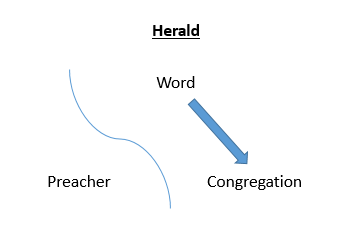 Karl Barth popularized this model.
God is the king and the preacher is the herald delivering God’s message to the people.
The emphasis is on the delivery of the Word and being normed by the Scriptures.
This model doesn’t necessitate a dynamic speaker or any special speaking abilities. It avoids the celebrity pastor trap. The downside is that there is a disconnect between the preacher and the congregation.
The Pastor Model
The pastor looks to his congregation and sees their needs and then goes to the Word and 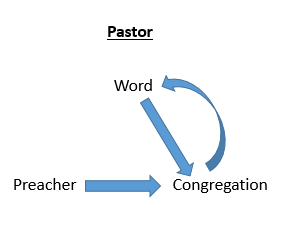 sees what his people need to hear from the Word and then gives that message to his congregation.
Emphasis is on the benefit of the hearers and is likely more guided by the Scriptures than normed by the Scriptures.
Intentionally seeks to preach to felt needs of the people. A downside is that the pastor might tend to start with psychology and counseling before going to the Word. This can lead to reading into the text.
The pastor might also speak to a particular situation that a particular congregant or two are dealing with, but those congregants don’t show up for that sermon.
Storytelling Model
 Preaching through storytelling.
The Gospel itself is a story so this model sees storytelling as superior theologically.
This model combines the herald and the pastor models.
It is easier for people to find themselves in a story than in a lecture. The sermon text becomes the story. A downside is that this model is sometimes used to influence or move people emotionally.
Witness Model
The congregation calls the preacher to the Word to deliver the sermon to them. 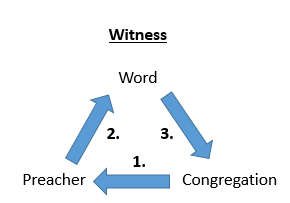
The preacher has authority to preach because he has been called by the congregation and because he has wrestled with the text of the Word.
The preacher goes to the Scriptures with the congregation in mind and he testifies about Christ to them as his words are to convey the event and witness to what he has heard and seen from the Word of God.
 To help American-Christians wake-up to elements of the American way of life that stand in opposition to the message of Christ and his will for our lives and to aid us in proclaiming the goodness and truth that God has gifted to us within our culture, nine Concordia Seminary professors have taken on the task of thinking deeply on various aspects of our “American minds” to see how they align with the “mind of Christ.” The articles they have generated comprise The American Mind Meets the Mind of Christ and cover the cultural landscape of health and wealth, individualism and community, religion and religiosity, science and culture, and media. With the seminary’s mission professor emeritus of systematic theology, Robert Kolb, at the helm of editing this tour de force of the good, the bad, and the ugly of the American culture that most American-Christians have taken for granted as being rather neutral or positive in our alignment to the mind of Christ, the Church in American has been given sage advice on how to best witness to the culture through the culture in mission and ministry.

 Andy Wrasman