5 Biographical Summaries of Early Church Fathers


Polycarp of Smyrna

Polycarp lived through the second half of the first century AD and the first half of the second century.  From a statement he is recorded to have made at his martyrdom, it is assumed that Polycarp was baptized as a child and didn’t have a moment in his life where he did not know the Lord.   He had great influence in the early Christian Church, largely because he was a disciple of the Apostle John.  His apostolic connection helped land him the Bishop office of Smyrna, and it also placed him in a very important role of preserving the orthodox teachings of the Apostles, which he did with tenacity.  It is reported that he called Marcion out to his face in Rome, calling him “the first born of Satan.”  He also pulled believers away from Gnosticism.  His willingness to die as a 2nd generation Church Father was another way in which he carried on like the apostles (all except John that is).  Today his writings only have survived through a letter he wrote to the Philippians, which is an important text for the modern church since it is one of the earliest writings we have from Christendom outside of the Biblical texts.

Irenaeus of Lyons

Irenaeus was born in Smyrna in the first half of the second century AD and he lived to see the close of that century.  Having been a student of Polycarp in his youth, becoming the Bishop of Lyons late in his life, he carried on a chain of successive leadership tracing back to the apostles.  In fact, Irenaeus prescribed such connection to apostolic succession for all bishops, stressing that they all taught what the apostles had received from Christ and passed on to followers such as his teacher, Polycarp.  It is on this authority that he spoke against the Gnostics who claimed to have a knowledge from outside of direct revelation from Jesus.  His refutation of the Gnostics, in particular the flavor of Gnosticism that derived from the followers of Valentinus, has been preserved in his work Against Heresies.  It is from this work that the modern Church had the most information about Gnosticism before the discovery of the Dead Sea Scrolls.  His writings also prove helpful to demonstrate the early formation of the New Testament Canon, since Irenaeus’s writings provide the first record of acknowledging a four-fold Gospel in Church writing and he references every text of the New Testament, except 3 John, in Against Heresies.  He may, or may not have died as a martyr.

Jerome

Jerome, AKA Eusebius Hieronymus, was born in Stridon just prior to the middle of the fourth century AD, dying around 420 AD.  In is lifetime he practiced monasticism as a desert hermit, was ordained a priest, served as a secretary to Pope Damascus, and helped found a monastery in Bethlehem.  Jerome was a prolific translator, translating numerous sermons and commentaries of Church Father Origen, for instance.  His greatest and most long-lasting impact on the Church was his translation of the Vulgate (Latin) Bible.  His translation work, in particular on revisions of the Septuagint (Greek version of the New Testament) led him to the understanding that the only inspired text of the Bible is that of the original text.  In addition to his translations, he added much to the Church’s collection of exegetical commentaries as well as throwing his hat into to the arguments of doctrinal discussion in his day concerning the value of virginity compared to marriage, the ever-virgin state of Mary, the value of asceticism, defending the use of the work of Origen, and writing against Pelagianism (though Jerome was likely a synergist himself).

The Cappadocian Fathers

Arius was an early fourth century priest who taught that Jesus was not eternal.  He taught that Jesus was a created being.  To formulate a catholic response to the teachings of Arius was the main reason Emperor Constantine I called the Council of Nicaea in 325 AD.  This council rejected Arius’ teachings (Arianism) and formulated the Nicene Creed as a proper Trinitarian statement, which adopted the term “of one substance” to refer to describe the oneness in divinity that the Father, Son, and Holy Spirit all shared.  After the council, not every church bishop kept to Nicene Creed and fell back to Arianism.  Soon after the Nicene Creed, Gregory of Nazianzus, Basil of Caesarea, and Basil’s brother, Gregory of Nyssa, were born.  All three were from Cappadocia and they were friends and worked together to advance and cement the formed language of the Trinity that God exists as three persons in one essence.  Their preaching and writing was significant in putting an end to Arianism in the fourth century and was crucial in the Council of Constantinople in 381 that re-affirmed the Nicene Creed.  Together these three men are known as the Cappadocian Fathers.

John Chrysostom

John Chrysostom (347–407 AD) was born John in Syrian Antioch.  He was appointed as the Bishop of Constantinople in 398. Chrysostomos means “golden-mouth” and is added to his given name as a result of his powerful sermons.  His homilies focused on living the crucified life and railed against the excesses and sinful indulgences of his day that were woefully present in the upper-echelon of the secular world and even the Church. Many loved his proclamations, but those on high did not appreciate his pointed applications at them, so he was deposed from this position and then sent into exile where he died.  Around 600 of his homilies survive today.

The Story of Everything

With the siren of a ram’s horn, the heavenly bodies are shaken and stars fall as the atmosphere is ripped open and rolled up like a scroll.  Bursting through the hole in the sky rides the Word of God on a white horse… riding on the clouds, leading his entire angel-army. All the dead from ages before are raised from their graves, and even the sea gives up its dead.  All of humanity is brought before the one on the white horse, the one who has King of Kings and Lord of Lords written on his robe and thigh.  They all bow down before him and confess that he is Jesus the Lord, and their confession gives glory to God the Father.  Jesus has mounds of books, books that give an account of each man’s life.  This is the day of reckoning.  This must be the beginning of the end, or the end of the beginning.

__________________________________________________________________

In the beginning, God the Father, God the Son, and God the Holy Spirit were.  All three had always been, were never created, nor made, none were before the other in time or majesty.  All three are eternal, all-powerful, ever-present, all-knowing, and all-good: one God.  By very nature they are love, existing in a community of love to one another.  It is out of their love and out of nothing that they together chose to create all things, visible and invisible, seen and unseen.  Humanity was the crown of their creation, being made last and in the image, likeness, of God.  God declared all that he had made to be very good… but there was war in heaven.

One of God’s heavenly beings, an angel named Satan rebelled against God his Creator in a mutiny.  Epic fail. Satan and his followers were cast out of heaven.  Losing the battle to God and his faithful angel-army, Satan turned to ravage humanity, the ones made in the image of the God he hates.  Possessing a serpent, Satan approached the first two humans in their garden home created for them by God.  The serpent deceived them into rebelling against God’s command given to them, and Adam and Eve, the parents of humanity, acted on that deception – high treason – they too thought they could take God’s rightful place of authority and power over all.

No one is above the Triune Lord.  God cursed the serpent, cursed Eve, cursed the man, cursed all of his creation, even the cute furry animals.  God damned it all!

He is a just God, a God of order.  He must punish insurrection, evil.

Yet, the Lord is by nature love.  The same love by which he created is the same love that compels him to exonerate and restore his creation.  In his knowledge of all things, The Triune Lord knew his creation would reject him and he knew what it would cost him to make all things new, but he chose to create anyways.

When cursing the serpent, God gave the promise that Eve’s offspring would deliver a death blow to his head – putting an end to Satan, his followers, and the aftermath of their rebellion.  God doesn’t forget his promises, even when man forgets and rejects not only God’s promises but God himself.

Evicted from the garden home God had given them, Adam and Eve bore children made in their likeness. One of their sons, Cain, killed his brother Abel in a fit of jealousy that God had rejected his sacrifice of offering but had found Abel’s sacrifice to be pleasing.  Cain’s descendants followed in the path of Cain with his sixth generation grandchild, Lamech, killing a man and rejecting God’s plan of marriage, taking two wives instead of one.  The line of Adam and Eve’s son Seth however, remained faithful to the Lord, for a time, until they too rejected God.  In time, only Noah remained from Seth’s line as the only man to be righteous through walking with God.

For mankind’s utter rejection of him, God destroyed all the world through water, sparing Noah, his sons, their wives, and two of each kind of creature.

Despite the salvation given to Noah’s family, men still rejected God.  Yet out of God’s love and his faithfulness, he continued to keep his promise to Eve.  He chose Abraham, a descendent of Noah, to be the father of his people, a great nation with a promised land, the man from whom the offspring would crush Satan.  God chose him despite the fact that Abraham had rejected him to worship other gods!  Abraham after being chosen by God rejected his idols and has faith in the one true Lord.  His descendants followed the Lord too, for a time, until they found themselves enslaved in Egypt… there they forgot the God of Abraham their forefather and they worshiped the gods of their masters.

Despite their rejection of him, God kept his promisesGod chose a man named Moses to lead his people out of captivity. Through many miraculous plagues against his people’s captors, Moses helped lead them to be free men again.  They didn’t approve of where God took them from Egypt, a wilderness badland with no food or water.  They wished they were back in captivity to the Egyptians.  They rejected God.  God saw to it that the old generation that escaped Egypt wouldn’t enter into his promised land, as they died off during the time he led them through the wasteland for forty years.

God is faithful to his people.  The rag-tag band of Abraham’s descendants that didn’t rebel in the wilderness finally entered into the promised land, acquiring it as God helped them drive out the nations that were in their land.  The seven-nation army couldn’t hold them back.  God was their king, but once again, his people chose to reject him, asking that he give them a king like all the other nations had a king.  They got their king, and like most men, he rejected God.  The succeeding king, King David, was of the lineage of the promise and he was chosen by God to have a descendent who would sit on a never-ending throne ruling over all the nations, the Son of David, the one to crush the serpent’s head.  Most people thought that David’s son who ascended the throne after his death, Solomon, who had built a permanent house for the Lord, and who was the wisest man to walk the earth, would be the son to rule forever, to end the wickedness in the land, but Solomon was just a man.  He had rejected God throughout his life, keeping many wives and idols in the land of God’s people, and so he died as all men do.

After Solomon’s death, the promised land to Abraham was split in two as Solomon’s descendants fought for power and authority over God’s people… power and authority over God’s people through the schemes of wanton men? Another rejection of God. Many of the kings of both kingdoms were perverse, worshipping other gods and leading the people to do so too.  Due to their rejection of the one true Lord, the God of angel-armies pulled back his hand of protection, even stirring enemy nations up against his whoring people as punishment for their idolatry.  Without God’s shelter, both kingdoms fall, the house of the Lord that Solomon built was decimated, and God’s chosen people found themselves once again slaves in a land not their own.  Among the exiled descendants of Abraham, a remnant remained faithful to God, having the same faith as Abraham.

Centuries passed.  God’s chosen people are still under foreign rule, far from being a great nation as God had promised.  But finally, during the time of Emperor Augustus of the Roman Empire, Eve’s promised offspring was born.  Unlike David’s son Solomon, this Son of David, is not a mere man; he is the eternal Word of God, born of God’s chosen theotokos, the virgin Mary.  The Son of God assumed a human nature.  His name is Jesus for he will save his chosen people.  He chose to save us by becoming one of us, The Son of God was so human that he even sucked at his mother’s breast for his body’s sustenance.  Yet the Son of God was also fully God, from his birth, heaven’s messengers delivered the good news of his life’s trajectory.  The shepherds who met these messengers accepted Jesus for who he truly is upon finding him.  Throughout his time with us many individuals received him as the promised savior against Satan and they were given the right to not just be called God’s people, but God’s children, loved by him.

Jesus claimed to be God again and again, publicly.  He performed many miraculous signs, publicly.  He taught with a wisdom that must be from God alone.  Many of God’s people wanted him to be their king, the one who would set his people free from all pain, suffering, and death, a greater escape than what Moses had enacted, a never-ending peace with a forever-ruling king.  Others denied his miracles, claiming that Jesus was acting by the power of Satan, not God.  In the end, Jesus wasn’t doing what they thought he should do: be the one-man army of God to overthrow their Roman captors – this was their promised land after all, not Rome’s.  His people rejected him, his closest followers and friends deserted him, and he was killed under Roman rule by crucifixion because of his people’s claim that he was the King of the Jews, an act of insurrection against the Roman Empire.  This is what he promised would happen, yet he also foretold that the grave would not hold him down.

Jesus’ death was the serpent’s strike at the heel of Eve’s offspring.

Jesus’ crushing blow of that serpent the devil came when no one thought it was possible; the Father raised his only eternally begotten Son bodily from the dead on the third day, just as Jesus had foretold it would happen.

Jesus’ exemplary life, his miracles, his teachings, his death, burial, and resurrection all serve as credentials to verify his title, the Son of God, the eternal Word of God.  After his resurrection, Jesus shared the story of everything to his closest followers and explained how he had to die and rise for the salvation of mankind and restoration of his creation.  Then Jesus left them, but he promised to return for them and all of his people.  His people are not those who were born of a particular bloodline, as many of Abraham’s descendants had thought.  They are all of those who received him, who called upon his name for salvation, who did not reject him, who returned from their ways to God’s way for the washing away of their evil, so that the image of God might one day be restored in each and every single one of them. They are those who God has chosen.

Repent and be washed into the name of the Father, the Son, and the Holy Spirit for the forgiveness of all your sins.

___________________________________________________________________

Jesus is coming, and hell is coming with him.

For those who have rejected him, his return is the beginning of the end.

For those he has chosen, his return is the end of the beginning.

106. Sharing the Gospel with 21st Century Technology

>> Click Here to Listen to the Episode! <<
(Right click and “save as” to download the mp3 file)

Or listen in iTunes!

Sharing the Gospel Online
Andy interviews his pastor, Arthur Andrews from Hephatha Lutheran Church.

Andy finds out why Pastor Andrews wants to start a podcast and explores other means by which Pastor Andrews has shared the Gospel using 21st century technology.

Show Links:

Hephatha Lutheran Church and School

The Thinking Fellows Podcast

Carey Nieuwhof’s Podcast

How to Start a Podcast

105. Lutheran Theology Part 6

>> Click Here to Listen to the Episode! <<
(Right click and “save as” to download)

Click here to listen in iTunes.

Andy and Wes close the series on Lutheran Theology discussing worship, the Church, and ministry.

Topics:

Liturgy
Contemporary Worship
Invisible Church
Visible Church
Marks of the Church
Luther’s Two Kingdom Theory
Priesthood of All Believers
Office of the Public Ministry
Office of the Keys

104. Thanksgiving Special 2017

>> Click Here to Listen to the Episode! <<
(Right click and “save as” to download the file)

Or click here to listen in iTunes.

This is the first Reconnect Thanksgiving Special.

Andy reads an article by Eric Metaxes that was published in 2015 in the Wall Street Journal entitled, “The Miracle of Squanto’s Path to Plymouth”.

He also shares the top 7 Bible verses for Thanksgiving which are compiled and explained by Kristi Winkler of ShareFaith.

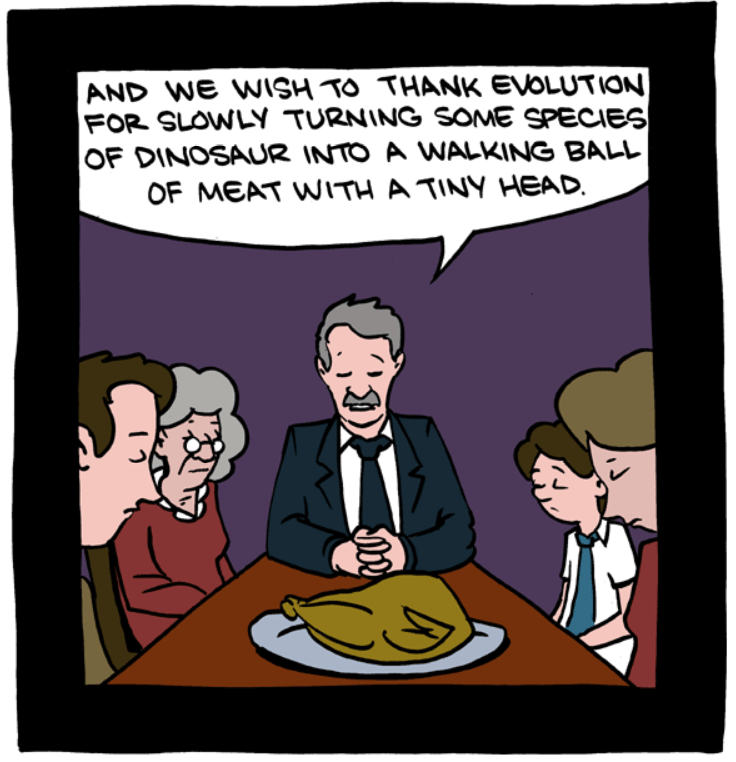
Thanksgiving Cartoon