Reconnect Episode 10: Religions, Atheism, and Wars!

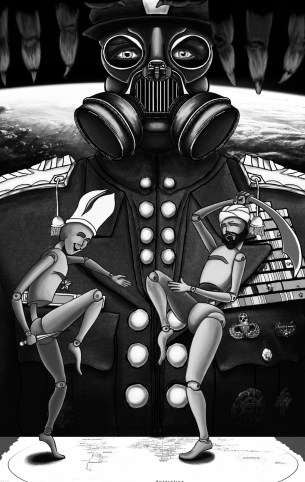
Drawing by Danny Martinez - an illustration from Andy Wrasman's book, Contradict - They Can't all Be True.
Drawing by Danny Martinez – an illustration from Andy Wrasman’s book, Contradict – They Can’t all Be True.

Click here to listen now!

Right Click to download.

Listen in iTunes!


All too often religions are said to cause evil and to cause wars. The Crusades are often times mentioned to support this claim.  Andy interviews Stephen Puls, a Lutheran high school history teacher, who explains what the Crusades were, why they were started, and what went wrong.

In the second segment, they turn towards looking at the role of Atheism in connection with wars!

By the end of this episode, you’ll have some great talking points whenever such an argument against religion arises.   And of course, the goal is to use these talking points to present the Gospel of Jesus Christ.  A few suggestions on making this connection are also shared in this episode.

Article discussed in show: “The Myth that Religion is the #1 Cause of War”.

Send comments, questions, and complaints to Andy Wrasman at andy@contradictmovement.org.  You may also record a short mp3 audio file to be shared on a future episode of Reconnect. 

Please share this episode on all of your social media sites and with all parties you think would benefit from listening to Reconnect.  Thank you in advance.

Reconnect Episode 9: Christian Stereotypes

Click here to listen now.  Right click to download. 

Listen online at iTunes.  You don’t need to download iTunes.

A friend shared a blog post to his Facebook wall.  The image was that of a Corona beer bottle stuffed into the sand of a beach.  The title was “Ten Christian Stereotypes I Hate”.

Christian StereotypesThe stereotypes were:

1. Cussing around me is a no-no.
2. I don’t like homosexuals.
3. I don’t drink alcohol.
4. I don’t like to have fun.
5. I’m judging you because you act differently than me.
6. I am ignorant or uneducated about beliefs other than my own.
7. I think I’m better than you.
8. I’m Republican.
9. I ignore science.
10. I’m a hypocrite.

I agreed with the author.  I thought most of these are Christian stereotypes, meaning many nonChristians assume these ten points about Christians.  I liked the list because I think these stereotypes hinder people who are not Christians from spending time with Christians and from listening to Christians.  Let’s think about it… if a nonChristian thinks that I am ignorant of all beliefs other than Christianity and that I ignore science, will I be able to offer an educated discussion on religious pluralism, the latest Richard Dawkins book, Islamic influence in the world, or what it means to be living in the “New Age”?

If a nonChristian typically swears a lot and finds out that I am a Christian, will he or she then not want to be around me in fear that I will either be judging him or her or act differently, holding a grudge the whole time?

If someone thinks I don’t like them, will that person want to be around me?  If someone thinks I don’t like a certain group of people, will he or she act differently around me because he or she does like that group?

I definitely think these stereotypes can setup immediate barriers between the nonChristian and Christian, so I shared my friend’s Facebook posting of this list.  However, when I shared it, I received many comments from people who thought the author, Brett Shoemaker, wasn’t even a Christian!  They thought he was mocking Christianity.  They thought he was twisting Scripture.  They thought a Christian would never say the things he did in the blog post.  If I liked his post, does that mean I’m twisting Scripture?  Does it mean I am not a Christian?

I arranged an interview with Brett and I let him know in advance that I was coming with argumentative questions.  I shared many of the comments with Brett for him to address.  I also shared other tough questions that I think led to the confusion and offered Brett a moment to explain himself… because to be honest, the way Brett worded some of his explanation could lead one to think that Brett is justifying getting drunk, swearing, homosexuality, and all other sorts of sins that are condemned in the Bible, especially if the Christian reading it fits the stereotype.

I grill Brett to find out if these stereotypes are in fact things that Christians should uphold and obey as commands from God, or if these Christian stereotypes fall into the realm of Christian freedom.

And for you dear listener, If these stereotypes are NOT in fact mandated by Scripture, and if these stereotypes have become unnecessary burdens or divisions for nonChristians to hear and receive the Gospel, then how should Christians respond who DON’T fit these stereotypes?  And if a Christian DOES fit these stereotypes, how should he or she respond to them if they aren’t in fact Scriptural mandates for everyone?

Send your thoughts, comments, and questions to andy@contradictmovement.org.  Feel free to write them, or if you want, record a short one minute reply and send it as a mp3 file for me to share on a future episode or Reconnect. 

Praying for God’s Healing

The Bible is full of miraculous healing.  Are we to pray for such miracles today?  Should we expect those prayers to be answered?  If they are not answered, were our prayers not heard?  Were our prayers not in line with God’s will, were they spoken out of doubt and thus not positively answered? In no particular, systematic order, the following are verses that I think aid in answering these questions:

James 5:13-16 – If I am ever really sick, I will follow this protocol.  I’ll call all the elders of my congregation together and other members of the congregation, as well as my close Christian friends, and I’ll have them pray for me.  I’ll also confess my sins.  This passage says that the prayers of a righteous person are answered.  I think this shows us that that God does not just care about our physical healing.  He also cares about our spiritual healing.  After all, it is our spiritual condition that brings all manners of illness and bodily breakdowns into our lives that lead us to death.  That condition is being a sinner. (Romans 6).  This passage from James also shows me that we are to pray for one another, sharing each others’ burdens, lifting them up to the Lord, who alone is the giver and sustainer of physical life. In this passage, there is mention of praying over a person, or as some translations word it, the laying on of hands.  This is one passage that church’s derive the practice of laying hands on a person for whom they are praying.  However is physical proximity a requirement for healing or answered prayers?

Luke 7:1-10 – This passage shows us how Jesus healed a man’s servant from a far distance.  The man who made the request was nowhere near his servant when he asked Jesus to heal him.  He was however close to Jesus, which I think harkens back to being in a righteous (in a right standing before God) when making our prayer request.  Obviously, though being in close proximity to the person who is sick when praying for him or her certainly helps comfort the ill in a way prayer from afar that is also unheard by the sick would not do, if the person is not healed.

Luke 18:9-14 – This passage is a parable that Jesus gave.  I am connecting this passage to James 5:13-16.  James says that the prayers of a righteous man are answered, but who is righteous?  In this parable, Jesus tells of a Pharisee who appears to be very righteous and he boasts publicly in his prayers about all that he has done right for the Lord over and above other men.  However, there is a tax collector nearby who simply beats his breast and confesses to the Lord that he is a sinner and asks for forgiveness.  Jesus says that the tax collector is the one whose prayer is heard, who is justified before the Lord.  The Pharisee was not in touch with his own sinfulness.  I really think this is key for physical healing, first confessing our sins and receiving the grace of God that comes through Christ, because a person offering a prayer under those conditions, certainly has faith in Christ.  A person with that heart position offering the prayer also has God’s kingdom first.  You see, God cares first for our heart (our spiritual condition) because if we are not cleaned by Christ of our sins, no matter what healing we receive in our physical bodies, we are still destined to die for the sins we have committed, and we are still facing eternal damnation, which God desires of no one (2 Peter 3:9).

James 4:2-3 – This passage connects to what I just shared with the last passage.  The heart behind the prayer matters to the Lord.  James says we don’t have because we haven’t asked.  If we don’t ask the Lord for physical healing, he might give it to us anyways, but if we never ask, then maybe that’s why we don’t receive the miraculous healing.  This passage also says that we don’t have if we ask from the wrong motivation; that is from a sinful motivation.  Again, confessing sins is connected to prayer, asking that God sets our hearts in alignment with his will, that our requests will be pleasing to him because they don’t stem from our worldly passions and desires.

John 14:13-14 – I imagine that this verse is one that raises questions for many people who ask for healing in the name of Jesus, yet healing isn’t experienced, and maybe worse, the person who was prayed for dies.  This verse says that if we ask anything in Jesus’ name, he will give it.  If the prayer is in his name, it will be inline with his will and it won’t spring from our sinful desires.  I’m connecting that statement back to the previous passage from James.  However, when it comes to healing, I think it’s safe to say that God doesn’t desire for us to die.  I already cited 2 Peter 3:9 to support this teaching.  Yet we also know that suffering can benefit believers, as shared by Paul in Romans 5:3-5.  Yet, if we ask in his name we should receive what we ask for according to this passage.. so how do we explain this?  Not all prayers are answered immediately, or the answer is immediate but we don’t receive it immediately.

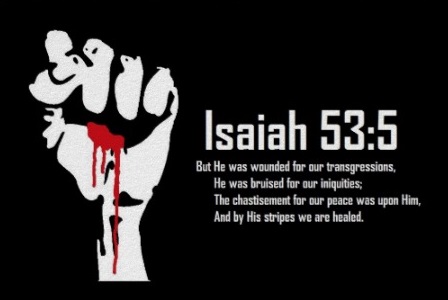
Isaiah 53:5 – We are healed by Christ’s stripes.  By his wounds we are healed.  First this isaiah 53is spiritually.  We are born again and reconciled to God.  The complete and total physical healing, doesn’t come until Christ’s return and we are raised to life with new, imperishable bodies as spoken of by Paul in 1 Corinthians 15. This means that if the person is a believer, even if he or she is not healed in this temporary life, that Christian will be healed in the life to come, and therefore Jesus has kept his promise.

Romans 8:28 – This verse is certainly a promise from the Lord!  It’s important to note that the Lord works for good through all things for those who love him.  Those who love him, know him, and are saved.  For those who die apart from Christ, we can’t find a good for that individual through their death; they have been cut off from the land of the living and from the Lord of life.

Mark 6:5-6 – In Jesus’ hometown, he could not perform many miracles, because the people lacked faith.  They didn’t believe.  Again and again, when someone is healed by Jesus, he tells them that their faith has healed them.  This indicated that it is not just the faith of the person praying involved with miraculous healing, but the faith of the person receiving prayer is also a component to miraculous healing.

Daniel 10 – This chapter is fascinating to me.  Daniel prays for three weeks straight with fasting.  On the twenty-fourth day, he receives a vision.  The angel in the vision says that Daniel’s prayer was answered the first day he prayed, but that a demon kept him from getting to Daniel to deliver the message of the Lord.  I wonder, if this still occurs.  Are our prayers answered immediately, but for some reason, in some way, the works of the devil and the other demons, keep them from arriving to us the moment they are answered?  How often has this occurred for us, but we haven’t been persistent in prayer, and thus when the answer comes, we don’t even make the connection that the answer is to prayer?  I don’t know about you, but in my sinfulness, I am not always persistent in prayer until I receive the answer.  I can’t tell you what I prayed for twenty-four days ago.

Mark 8:22-26 – Not all of Jesus’ miracles were immediately complete.  This is an example of a partial healing.

1 Corinthians 12:4-11 – Some argue that all of these gifts are not for today.  I am not one of those people.  In this list of spiritual gifts, we see the gift of healing listed.  All of these gifts are from the Spirit and given in proportion to each individual as he sees fit.  Because of this, some people might see more healing in response to their prayers than others.

Luke 11:5-12 – Fascinating.  Jesus says we can be given more of the Spirit when we ask for more of the Spirit.  If prayer for healing is a gift of the Spirit… I’ll let you finish that sentence as you pray and think about these verses.

These verses of course are not all encompassing of everything revealed in Scripture concerning prayer, and in particular prayer for healing.  But they are a start if you are finding this from an Internet search.  Please leave some comments if you have more verses to share, or other applications and information about the verses listed here.  And feel free to leave questions too.  You can contact me personally at andy@contradictmovement.org.

Reconnect Episode 8: Three Things Christians Say to Hurt Their Credibility

Left click here to listen now! Right click to download episode.

Listen in iTunes.

George and Andy, discuss a series of articles from Credo House entitled: 21 Things Christians Say to Hurt Their Credibility.  In this episode they have time to discuss three of these statements:

1. “You can’t use the Bible to prove the Bible.”

2.  “Good question.  I’ll find the answer and get back to you.”

3.  “One white lie will send you to hell for all eternity.”

We want to be credible witnesses of Christ.

Andy and George agree that some of these statements really do hurt the credibility of our Christian witness and should be avoided, but they come to disagree with at least one of these articles, because they think the statement is in fact Scriptural, thus should be spoken, but maybe there is a better way of presenting the truth to a nonbeliever.

Other questions and topics emerge as they discuss these articles, such as: how do we know the Bible is the Word of God, how should we respond to questions we don’t know the answers, is it possible for Christians to have all the answers to life’s questions, what exactly is revealed to us in Scripture and why, how should we approach preparing answers to difficult questions raised against or about the Christian faith, why should churches teach apologetics, and the very controversial topic of varying degrees of punishment in hell!

If you want to chime in on any of these topics or give a short review of any episode of Reconnect, record a short 30 second to one minute long audio clip, stating your name and the episode number you are addressing, and send it to Andy at andy@contradictmovement.org as an mp3 file.  If you have any questions you want addressed on the show, send them there via email as well.  Thanks.  Reconnect us, Oh Lord. 

Reconnect Episode 7: Jews Claim that Jesus did not Fulfill Messianic Prophesy

Left Click to Listen.  Right Click to Save. 

Listen in iTunes!

Reconnect logo designed by Kyle Beshears, author of Robot Jesus.

Jews reject Jesus as the Messiah, because they claim he didn’t fulfill Messianic prophesy.  Andy received an email from someone arguing that there were four key prophesies Jesus did not fulfill.  The sender also listed other ways in which Jesus contradicted the Hebrew Bible.  Andy discusses this email with Crean Lutheran High School’s Old Testament teacher, Conni Schramm.  She provides a Biblical response to all of the man’s objections.  Her first response to the email is shocking, and it should serve as a reminder for all of us entering into such debates via online messaging!

How would you have responded to these objections?  The following is the email Andy received at andy@contradictmovement.org in its entirety (swear words are blanked out):

I am contacting you because one of your members noticed my Israeli Air Force shirt today and proceeded to launch into horribly misinformed evangelical nonsense.  I’ve had more enlightening conversations with Time Warner Cable technical support.  He shared his nonsensical worldview with me, and I felt I should contact you, giving you feedback on one of your flock.  Simply put, he was an idiot, but just barely intelligent enough to be _____________.

Let me speak frankly, then: Jesus of Nazareth was not the messiah.

What is the Messiah supposed to accomplish? One of the central themes of biblical prophecy is the promise of a future age of perfection characterized by universal peace and recognition of God. (Isaiah 2:1-4, 32:15-18, 60:15-18; Zephaniah 3:9; Hosea 2:20-22; Amos 9:13-15; Micah 4:1-4; Zechariah 8:23, 14:9; Jeremiah 31:33-34)

Specifically, the Bible says he will:

  1. Build the Third Temple (Ezekiel 37:26-28).
    Second one was already standing – he’s out!
  2. Gather all Jews back to the Land of Israel (Isaiah 43:5-6).
    There was an enormous population of Jews outside Israel that stayed outside – nope.
  3. Usher in an era of world peace, and end all hatred, oppression, suffering and disease. As it says: “Nation shall not lift up sword against nation, neither shall man learn war anymore.” (Isaiah 2:4)
    If anything, more people were killed in his name than any other reason.
  4. Spread universal knowledge of the God of Israel, which will unite humanity as one. As it says: “God will be King over all the world ― on that day, God will be One and His Name will be One” (Zechariah 14:9). – Nope.

If an individual fails to fulfill even one of these conditions, then he cannot be the Messiah.  Jesus failed at all four.

The Messiah must be descended on his father’s side from King David (see Genesis 49:10, Isaiah 11:1, Jeremiah 23:5, 33:17; Ezekiel 34:23-24). According to the Christian claim that Jesus was the product of a virgin birth, he had no father ― and thus could not have possibly fulfilled the messianic requirement of being descended on his father’s side from King David. (1)  – Yet the genealogies of the gospels CONTRADICT EACH OTHER

The Messiah will lead the Jewish people to full Torah observance. The Torah states that all mitzvot remain binding forever, and anyone coming to change the Torah is immediately identified as a false prophet. (Deut. 13:1-4)   So, he’s a dissident.
Throughout the New Testament, Jesus contradicts the Torah and states that its commandments are no longer applicable. For example, John 9:14 records that Jesus made a paste in violation of Shabbat, which caused the Pharisees to say (verse 16), “He does not observe Shabbat!”    And a blasphemer.
Quite Frankly, sir, your evangelical organization is a sham, and the word “Contradict” in your title only refers to contradicting yourself.  You can’t hold that all parts of the bible are true if Jesus BLATANTLY contradicts the Torah, though you hold that it is the binding word of God (written by people, by the way, even Torah) even though it is contradicted by a blasphemer and political dissident who accomplished exactly nothing.  Jesus contradicts Torah, yet you worship Leviticus 18:22. YOU ARE CONTRADICTING YOURSELF! Normally, I don’t get too upset about these things.  This person was hell-bent on converting me back to idiocy, and I am hell-bent on letting you know the following:
1. That your followers are ________.  You won’t win any hearts and minds with people like that.
2. That your followers are also idiots, they are incapable of thinking for themselves save the lies with which you fill their heads.
3. I shall make it my goal to contradict your insidious movement whenever the opportunity arises.