The Qur’an and the Injeel #1

A Muslim Noodle Shop (LaMian Dian) in Hangzhou, China.
In China, it is very common to see Muslim run
noodle shops throughout the country.

The Islamic creed, when spoken in faith, makes someone a Muslim.  This creed is “There is no God but Allah, and Muhammad is his messenger.”


The Qur’an, which means recitation, is the message Muhammad received from Allah. 


The Injeel is the Arabic name given to what Christians call the New Testament. 

_____________________________________________________________________________

From looking at the Islamic creed, one would assume that Muslims reject the Injeel (The Gospels) to be the word of God, since Muhammad is the messenger of the one and only God, Allah.
This however is not the case according to what is written in the Qur’an…
Qur’an 2:136 – “Say ye: ‘We believe in Allah, and the revelation given to us, and to Abraham, Isma’il, Isaac, Jacob, and the Tribes, and that given to Moses and Jesus, and that given to prophets from their Lord: We make no difference between one and another of them: And we bow to Allah.” 
Qur’an 3:2-3 – “God!  There is no god but He, – the Living, the Self-Subsisting, Eternal.  It is He who sent down to thee, in truth, the Book, confirming what went before it; and He sent down the Law of Moses and the Gospel of Jesus.” 
Qur’an 5:82“You will surely find the most intense of the people in animosity toward the believers [to be] the Jews and those who associate others with Allah ; and you will find the nearest of them in affection to the believers those who say, “We are Christians.” That is because among them are priests and monks and because they are not arrogant.”
Qur’an 5:46-47 “And We sent, following in their footsteps, Jesus, the son of Mary, confirming that which came before him in the Torah; and We gave him the Gospel, in which was guidance and light and confirming that which preceded it of the Torah as guidance and instruction for the righteous. And let the People of the Gospel judge by what Allah has revealed therein. And whoever does not judge by what Allah has revealed – then it is those who are the defiantly disobedient.”

Qur’an quotes taken from Sahih International from http://quran.com.

_____________________________________________________________________________

The Qur’an clearly defines the Injeel (Gospels) to be the word of Allah.  Muslims teach that Jesus was a prophet of Allah.  If you ask if a prophet speaks the word of God, they would say yes.  Clearly, this brings up a problem because the Injeel records Jesus referring to himself as God and his followers teaching others that he is God.
So how do Muslims get around this contradiction, especially since the Injeel, confirmed by Muhammad to be the revelation of Allah, came before the the Qur’an?Muslims claim that the Injeel has been corrupted, which is why Allah sent his word to Muhammad.

______________________________________________________________________________

I will post different responses a Christian can provide to Muslim claims that the Injeel has been corrupted over the next couple of weeks.

The Bible or the Qur’an

One Minute Apologist looks at the Bible and the Qur’an – which is the Word of God?  Obviously, neither could the Word of God, but because of contradictions, the both can’t be the Word of God.

Summary of the short video:

They both can’t be true because they contradict each other.
Historically establish that Jesus predicted his violent death and that he died a violent death, then Bible must be correct and not the Qur’an.  If he didn’t die a violent death, then the Qur’an would be correct on that point, however it would be wrong on Jesus being a prophet, because Jesus predicted he would die a violent death, but he did not.  Catch 22.

My comment on this video: I think this argument falls short. Wouldn’t the Qur’an have to contain an account of Jesus predicting his own violent death for there to be a Catch-22. Muslims already say that the Bible has been corrupted, so anything that is a contradiction between the two is erased away under the conclusion that man changed the Bible at some point in time. Of course, it’s a good start to a conversation, because after a Muslim presents the Bible’s been corrupted argument, more in-depth conversation can begin. Not bad for a one-minute video (that was two minutes long).

God is too big to fit into one religion – rebuttal.

This is an interesting concept.  God is too big to fit into one religion.  If this were true, it’d means that every religion is wrong about their view, or lack of a view, of the divine (God).

This is ultimately saying that God is unknowable from one religion alone, and since the teachings of the various religions contradict each other, combing them all into one God-smoothie doesn’t help matters.

Wrong #1 – Christianity, as well as some other religions, claim that God is omnipotent, omnipresent, omniscient, and omnibenevolent.   How can God be bigger than that?  Is it even possible for a God to exist bigger than a God that is not restricted by time, space, or matter, who is not limited in any ability to do as he wills, he has complete and perfect knowledge of everything, and always acts in ways that are wholly good?  I don’t think so.  Therefore, it’s completely possible that God can fit into one religion.

Wrong #2 – Religions aren’t containers.  They don’t contain God.  They’re not boxes that somehow, God conveniently fits into, although some religious adherents treat their religions as such.  Religions offer revelations and explanations to who God is.  It’s committing a category error to say that “God is too big to fit into one religion.”

What’s the Fate of those who have Never Heard the Gospel?

What’s the fate of those who have never heard?

I received the following questions from a student:

“One thing that I always have had a question about is what happens to people that never had the chance to hear about the gospel and/or weren’t God’s chosen people. For example, ancient Chinese or American/African Tribes; they never had a chance to hear about Jesus, so how can they be placed on the same scale with someone that rejected Jesus purposefully? Also, what about other cultures during the time of the Israelites? They weren’t God’s chosen people and couldn’t be part of the covenant.”

These are all really good questions and the answers to them may never satisfy us.

The Background to the Questions

These questions are ultimately questioning God’s rationale for condemning sinners to hell.  From Scripture we know that it is not God’s desire for humanity to perish in hell.  For example, in Ezekiel 33:11 the Lord says, “I take no pleasure in the death of the wicked, but rather that they turn from their ways and live.”  Peter also writes, “He is slow with you, not wanting anyone to perish, but everyone to come to repentance” (2 Peter 3:9).

Since this is the heart position and desire of God, it is difficult for us to understand how and why he can then sentence members of humanity to eternal damnation.  God must do this because he is not only loving, righteous, and merciful, but also just.  These questions come from a knowledge that God has provided a way out from eternal death, and that is through having faith in Jesus Christ.  But what about those who have not heard about Jesus to have faith in him?  Since they didn’t receive an opportunity to hear the good news of the “way out” do they have a different standard of judgment or a different punishment than the rest?

The Biblical Data

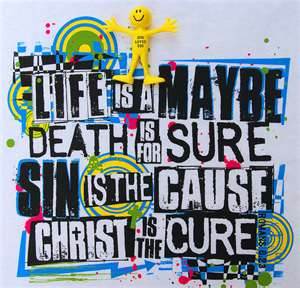
Sin is the cause of death.  God did not create sin.  He created the world and it was good!  God did not tempt Adam and Eve and he has no blame for sin or its effects.  Since he is a just God, he must punish sin.  We might think that eternal death, or hell, is too strict of a punishment, but we are forgetting who the offense is against.  If a person murders someone, and the murder only takes a second to commit, the just punishment lasts for a lifetime, a life for a life.  Despite most crimes’ short length of time to commit, the punishments sentenced are far longer.  And in some cases, such as rape, many people think the sentences are not long enough, or severe enough.  What then about crimes (sin) committed against God, a being of far greater worth than a human being?  Consider that the crimes (sin) committed against God are committed for a lifetime.  When these considerations are taken into account, eternal punishment becomes more rational.  Lifelong crimes against an eternal God, justly bring eternal punishment.  (Genesis 1-3, Romans 1-3)

General Revelation is given to everyone.  These questions fail to recognize that God has revealed himself to everyone, even those who have not heard the Gospel message.  God has revealed himself in two different ways, general revelation and special revelation.  General revelation is what God has revealed about himself from what he has created.  Romans 1:18-20 says, “The wrath of God is being revealed from heaven against all the godlessness and wickedness of men who suppress the truth by their wickedness, since what may be known about God is plain to them, because God has made it plain to them. For since the creation of the world God’s invisible qualities—his eternal power and divine nature—have been clearly seen, being understood from what has been made, so that men are without excuse.”  This means that God’s general revelation places everyone in a state of guilt for their sins.  Everyone is left without excuse.

Special revelation is required for salvation; general revelation itself is not enough for salvation.  Special revelation is God’s direct communication of himself to mankind through his word and through the person of Jesus Christ.  Faith in Christ is explicitly required for salvation, as Jesus said, “I am the way and the truth and the life. No one comes to the Father except through me” (John 14:6).

Faith receives the benefits of grace.  Scripture teaches that “it is by grace you have been saved, through faith—and this not from yourselves, it is the gift of God— not by works, so that no one can boast” (Ephesians 2:8-9).  Jesus directly speaks this truth to Nicodemus in John 3:16, stating, “For God so loved the world that he gave his one and only Son, that whoever believes in him shall not perish but have eternal life.”   A person can only believe the good news of Christ’s life, death, and resurrection, which served as a substitionary atonement for the penalty of our sins, if he or she has heard the good news!  (Romans 10:12-15)

And that’s the rub!

That’s what burns!  We’ve fallen short.  We deserve eternal death.  God has paved a way for salvation for mankind through the person of Jesus Christ.  For us to have that salvation, we have to hear the good news of that salvation and believe it!  But not everyone hears, yet they’re still guilty because of general revelation.  Everyone is left in a guilty state before God with no excuse and in need of Jesus for salvation.

A Christian Response

We ought to be thankful for a second chance at all!

Because God is not at fault in our sin, and because God suffered dearly in the process of bringing about salvation for mankind, who are we to question him?  God didn’t need to give anyone a second chance, but he did and he still does. If God chose to damn everyone, he would still be holy and just.

Who are the people who still need to hear the Gospel?

These questions seem to imply that the people who have not heard the Gospel are going to perish and suffer hell, not because of their fault, but because of God’s fault or the fault of the church for not sharing the Gospel with them.  This is totally, and utterly, not true.   Those who have not heard the Gospel are sinners!  They still deserve eternal punishment for their sins, and general revelation leaves them without excuse.

Check the numbers

For people who question and complain about the people who have not heard the Gospel of Jesus Christ, there is a “numbers” response.  Essentially, the numbers tell us that there are more people living now than ever before.  There are more Christians in this world than ever before.  We can travel to far off lands and communicate with more people all over the globe without even leaving our house because of the Internet.  This means that in this period of time, more Christians can reach more people than ever before in history.  This means it is time for Christians to quit asking why and what if about the unevangelized from the past, present, or future, and simply get to work sharing the Gospel.

Clean-up questions

There are numerous other questions that can be asked similar to the initial question of “what about the unevangelized?”

“What about the Gentiles during the Old Testament period?  They weren’t God’s people and couldn’t be a part of the covenant?” 

The response to this, I feel, is pretty simple.  They could be engrafted into the nation of Israel.  Rahab, the prostitute (Joshua 2), and Ruth, the Moabite (The Book of Ruth), are both prime examples of how Gentiles were included in the nation of Israel.

“What about the Israelites before Christ?  How could they be saved if salvation is exclusively through faith in Christ?  If they were saved apart from faith in Christ, couldn’t people today still be saved apart from Christ?” 

The Israelites before Christ still had faith in Christ.  The ones who received salvation had faith in the promises about Christ’s coming.  They recognized that they had broken God’s law and they trusted that he would show them mercy.  These promises date all the way back to the beginning of time, right after the Fall, when God promised that the offspring of Eve would crush the serpent’s head.  (Genesis 3)  Or the Abrahamic Covenant.  (Genesis 12, 15, and 17) Or the Lion of the Tribe of Judah (Genesis 49).  Or the promise given to David. (2 Samuel 7)  Since Jesus has been revealed, faith now is placed in him and not the prophecies of his coming for salvation.