
John Calvin. This is the man that stands next to Martin Luther as being the main leader of the Reformation. Today if someone speaks of Reformed Theology, he or she is referring to the teachings of Calvin, not Luther. That’s how influential Calvin’s teachings were and still are. Calvin was French, and much younger than Luther. He wasn’t even ten years old when Luther nailed his theses to the church door in Wittenberg. He also took a similar, but opposite, route to education than Luther. Luther started out to be a lawyer, but ended a priest. Calvin began his studies to be ordained, but switched to studying law, though he never went on to practice law after finishing his studies. His magnum opus is his systematic theology book, The Institutes of the Christian Religion, which underwent five editions before it was completed. Though I can’t find it being a confessional text for any Reformed denominations, it is a work that still holds much authority in their circles. From this text, I will discuss an excerpt of his writing on “Church and State.”
The following is an excerpt from The Institutes of the Christian Religion Book 4, Chapter 20, Sections 22, 23, and 32:
“The first duty of subjects towards their rulers, is to entertain the most honorable views of their office, recognizing it as a delegated jurisdiction from God, and on that account receiving and reverencing them as the ministers and ambassadors of God….
I speak not of the men as if the mask of dignity could cloak folly, or cowardice, or cruelty, or wicked or flagitious manners, and thus acquire for vice the praise of virtue; but I say that the station itself is deserving of honor and reverence, and that those who rule should, in respect of their office, be held by us in esteem and veneration.
From this, a second consequence is, that we must with ready minds prove our obedience to them, whether in complying with edicts, or in paying tribute, or in undertaking public offices and burdens, which relate to the common defense, or in executing any other orders…
But in that obedience which we hold to be due to the commands of rulers, we must always make the exception, nay, must be particularly careful that it is not incompatible with obedience to Him to whose will the wishes of all kings should be subject, to whose decrees their commands must yield, to whose majesty their sceptres must bow. And, indeed, how preposterous were it, in pleasing men, to incur the offence of Him for whose sake you obey men! The Lord, therefore, is King of kings. When he opens his sacred mouth, he alone is to be heard, instead of all and above all. We are subject to the men who rule over us, but subject only in the Lord. If they command anything against Him let us not pay the least regard to it, nor be moved by all the dignity which they possess as magistrates—a dignity to which no injury is done when it is subordinated to the special and truly supreme power of God.”
Calvin is writing to address the question of what the relationship should be between the Church and the State. At Calvin’s time of writing, the two institutions are being unbound from one another in Western civilization. Such rapid disconnect left many questions for the leaders of congregations and for laypeople on what their role was now to the State. Questions such as, “If the Church is no longer married to the State due to the ramifications of the Reformation, do Christians still owe any allegiance to the State, or just to the Church?” were common place. Though Calvin wasn’t directly writing to the Christians who found themselves under the rule of the Islamic Turks, such a position wasn’t entirely implausible or completely out of mind for many 16th century Christians after the end of the Crusades just a couple of centuries before the start of the Reformation.
The answer Calvin gives to this question is that a subject’s first duty to his magistrate is to honor his office, recognizing that his authority to rule and govern is directly established by God. If this is the first disposition a subject has of his governing ruler, then the appropriate response would be to honor the person holding that established office of authority as being a minister and representative of God. He makes clear that the honor doesn’t go to the particular man in the office on account of that man’s virtue, because the man will almost certainly fall short of deserving such high honor, first because he’s a sinner, but also since the maxim “power corrupts and absolute power corrupts absolutely” does ring true so often throughout history. Instead, the honor goes to the man in response to the honor due to the office the man holds. The response that should then follow from respecting the man by respecting the office he holds is that subjects will in turn be obedient to the lord’s decrees and properly pay any taxes required and aid in any offices of the common defense that arise to be necessary for the common good.
Such a calling to submit to all rulers is challenging to the core. Bending the knee to orders from leaders that sided with Rome would be a tough pill to swallow for a Christian of the Reformation in Calvin’s day. Or, if a Christian submitted to a Muslim ruler that believer’s allegiance to Christ and his Church could be questioned, raising doubt for that person’s salvation. Calvin knew these questions and objections would follow his plea to revere and respect the rulers of men, so he provided the following solution: only be obedient to a ruler insofar as that obedience does not cause one to be disobedient to the God who placed that ruler in the office of authority. If the command of a ruler goes against the command of the one who put him in the position to rule, let the law go unfollowed, in fact break it without hesitation, since the rule of God trumps the rule of men.

Speaking of one authority trumping the authority of another, we should consider the presidency of Donald Trump in America. Applying Calvin’s teachings to President Trump, offering reverence to him and holding him in high respect, doesn’t mean a Christian must agree with his “America First” policies, or ignore his numerous divorces, or approve of his (at times) vulgar language or his speech that has been interpreted to be racist, Islamophobic, or misogynistic, or condone his frequent ad hominem arguments and late night tweets. The Christian response to Trump’s presidency should be the same as that given to other presidents of America, a life of submission, as long as one isn’t required to go against God’s law through any of the president’s executive orders or signed bills. The Christian should recognize that President Trump is their president and wish him to be successful in his calling and offer him the grace afforded to all men through Jesus Christ. The Christian should also pray for President Trump, asking that God give him wisdom and capabilities to fulfill the high calling and duties of the office he holds with humility. In closing, it is apparent that Calvin’s teachings in regard to the State and the Church are a difficult calling for the subjects, as much as for the man in authority to fulfill the calling God has given him.
 Erasmus was born in Rotterdam, Holland, in 1466, and he died in 1536. He was a reformer, but one that stayed loyal to the Roman Catholic Church and the supremacy of the pope. His reformation work focused on fixing the abuses of the clergy. Erasmus is famously remembered by modern day reformers for his exchange with Luther in which he sought to defend humanity’s freewill in conversion against the predestination teaching (faith alone is a work of God) espoused by many of the Reformers. Erasmus’ writing and rhetorician skills, Luther claimed was far superior to his own in the opening of Bondage of the Will, Luther’s response to Erasmus’ apology for freewill. Apart from his role in this famous debate with Luther, Erasmus has had a long lasting influence on the Church by his emphasis to returning to the original languages of the texts of Scripture. For almost a millennium the Bible was largely published in Latin in the Western Church, but Erasmus took it upon himself to publish a Greek text of the New Testament compiled from the best manuscripts available to him. It is from future editions of Erasmus’ Greek text of the New Testament that Luther translated the New Testament into German and Tyndale translated the New Testament into English. Today it is expected to learn Greek for a M.Div. degree, instead of Latin, and this educational and hermeneutical emphasis can be traced back to Erasmus of Rotterdam.
 He was as reformer much like Luther, from the start arguing against not just abuses in the Church, but also against accepted practices that he found to be unbiblical, such as the ordinance that priests are not to marry and many of the required fasts of the Roman Catholic Church during Lent. To such ends, he didn’t just write; Zwingli actively demonstrated his teaching by being married in public and chowing down on sausages for all to see during the Lenten fasts. It would seem that such a brazen man who proclaimed Christ’s work to save and who actively broke unbiblical mandates would have found unity in their reformation movements, but Luther and Zwingli butted heads to the extreme over the Lord’s Supper. Zwingli didn’t just reject transubstantiation as Luther did; he reduced the meal down to a symbolic remembrance meal, that flew in the face of Luther who was still very much a sacramentarian, who recognized that all the grace of God was given in the meal to all who partook of it. An obvious stain in history for Zwingli for the eyes of the modern day Christian is the militant force he exerted against the Anabaptists within his area of jurisdiction. Zwingli died on a battlefield as a chaplain in a fight against the Roman Catholic Church.
 Marin Bucer (1491-1551) was a German Reformer who was forced to center his work in Strassburg, Germany, after his excommunication from the Roman Catholic Church for his work in Wissembourg. He is remembered most for his uniting work in his attempts to bring agreement between Luther and Zwingli, as well as his longstanding hope and work to see Roman Catholics join the Reformation. When Strasbourg accepted the Augsburg Interim after a defeat to the Roman Emperor in the Schmalkaldic Wars, Bucer was exiled to England for his remaining dissension against the terms of the interim agreement. Bucer was welcomed in England and was even asked to work on a revision of the Church of England’s Book of Common Prayers. Due to his work and agreement in so many different factions of the Reformation Movement, Bucer is claimed as being a member of multiple camps of the Reformation today.
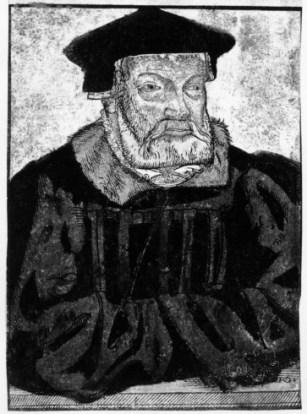 was present to hear Luther’s 1518 Heidelberg Disputation theses. Brenz was soon won over by Luther’s teachings and at his first preaching assignment in 1522 at St. Michael’s in the Franconian city of Schwäbisch-Hall, he set about reforming the Church in that territory, which became a 26-year endeavor. In addition to his reforming work in Schwäbisch-Hall, Brenz became a leader in further formulating, clarifying, and advancing of Luther’s teachings, most notably in the Luther and Zwingli debate over the Eucharist. Brenz wrote Syngramma Suevicum, a text that defined the Lutheran position of the sacrament of the altar, and he was a voice for the Lutheran position of the Lord’s Supper at the 1529 Marburg Colloquy. Later in his life. Brenz picked up the debate again against the Swiss position on the Eucharist that reduced the meal to a symbolic memorial with his 1561 writing, De personali unione duarum naturarum in Christo. Aside from this major focus of this teachings, Brenz was an influential voice for religious tolerance, calling for debate and not bloodshed over doctrinal differences, as was the typical response to religious disagreement in the 16th century.


 Andy Wrasman