Aquinas – 5 Arguments for the Existence of God

I read Aquinas’ three articles on the existence of God found in his Summa Theologica.  The following article I wrote as an analysis of his five arguments for the existence of God found in article 3.  To better understand and engage with this article, please read the linked selection above.  Thank you! 

Aquinas

Thomas Aquinas, a Dominican friar, born in Aquino, Italy, in the 13th century, is known as a master of systematic theology, with no one of great comparison before him besides Augustine.  He was a great influencer in the tradition of scholasticism, a school of thought that placed a high emphasis on reason.  As such, it is no surprise that Aquinas is well known for his contribution to natural theology, reasoned arguments from logic and natural experience that make the case for the existence of God.  These arguments are found in his work, Summa Theolgica, a text that Aquinas wrote as a summary of the Catholic faith.  His other two important works include the Summa contra Gentiles, written to postulate Christian theology in the context of the unbeliever, and the Compendium Theologiae, written for the lay beginner learning the faith.  In this paper I will briefly present and analyze his arguments to answer the question, “Whether God Exists?” as found in Aquinas’ Summa Theolica.

Aquinas’ purpose in this selection of his work is to show that God does exist in opposition to the objection to God’s existence on account of the presence of evil in the world (since God is infinitely good, it appears there should be no evil if he existed) and the objection that supposes it is reasonable that everything in the natural world can be accounted for by nature itself and that everything voluntary can be accounted for by the human will apart from God’s existence.

To answer how he knows that God exists, Aquinas gives five arguments from natural knowledge.  The first argument is that the observed motion in the world dictates a first mover to initiate the movement.  The second argument is that God alone has the necessary qualities to be the efficient cause of all things (to be that first mover), since a thing cannot bring itself into existence (existing before it existed).  The third argument derives from the possibility for things not to be, meaning it’s possible for nature to not exist, but at that point there would be nothing, and since nothing produces nothing, it then follows that nothing cannot be the explanation of the first mover. The fourth argument is that of gradation in which all aspects of nature have a comparable greater than or less than quality to them and that the maximum in any given classification (genus) is the cause of all in that category.  It follows that there must be something that is maximum to all beings from which everything derives: God.  Finally, Aquinas’ fifth argument for the existence of God is taken from the orderly and intended purposes found in all things of the natural world, thus pointing to an intelligent being that orchestrated this design.

Aquinas then uses these five arguments from nature to refute the two objections against the existence of God that he is striving to refute.  To the existence of evil being incompatible with God, Aquinas applies the principle that God is the highest good stating, “He would not allow any evil to exist in His works, unless His omnipotence and goodness were such as to bring good even out of evil” (Kerr, 114).  It is reasonable to say that the best of the best in the realm of goodness would be able to produce good out of evil.  To put the nail in the coffin for the objection that nature can produce all we see in nature, Aquinas simply works from the fifth argument he gave back to the first.

Aquinas adequately met his goal to defend the existence of God against these two objections, but I’m not sure who would have been making a case for naturalism in Aquinas’ day that would have been interacting with this work to warrant such an articulated effort on his part.  In today’s zeitgeist, numerous sophisticated arguments for atheism have emerged (Darwinian Evolution, multiverse theory, panspermia theory, and even redefining nothing as something).  However, all of these arguments (or mere theories) fail to answer the question of first causes and break down upon the same arguments Aquinas offered almost 800 years ago.  In fact, Aquinas’ arguments are essentially the same arguments from nature used today; they are just more refined and organized into syllogisms now (usually).  For example, William Lane Craig has in recent decades popularized the Kalam Cosmological Argument, stems back to Aristotle (who said everything has a cause), was then established by Aquinas (who said God is the uncaused cause), then repackaged by Islamic philosophers in the Kalam argument, which states: 1) Everything that begins has a cause.  2) The Universe has a beginning. 3) Therefore, the universe has a cause for its beginning.[1]  The personal creator God is that cause, since as Aquinas explained, the universe couldn’t cause itself and it couldn’t have been the product of nothing.  The argument of design and order that Aquinas presented, which in modern day is typically called the teleological argument, has garnered much more detailed support through our increased knowledge of the fine details of the building blocks of life (cells, DNA, etc.) and the intricacies of organ systems within living creatures and the interplay of ecosystems – all we know of the world (which is more than in Aquinas’ day) screams for a Creator, just as Paul said it does in Romans 1.

In closing, Aquinas’ work seems to be the foundation of much of modern day Christian apologetics concerning arguments from nature.  However, arguments from nature are arguments that any Theist can offer, as demonstrated by Craig’s reinvigoration of the Islamic Kalam argument.  I’d argue that it is far more important to focus Christian apologetics on revealed knowledge, pointing to the historicity of the Gospel narratives concerning Jesus’ life, death, and resurrection that demonstrate not only that God exists, but tell us precisely who God is and what he thinks of us and what he has done for us.  Centering such arguments for the existence of God around the cross of Jesus of Nazareth and his subsequent empty tomb also better counter the problem of evil that Aquinas was ultimately addressing through his arguments for the existence of God.  Instead of just posturing that an infinitely good God isn’t incompatible with the existence of evil, because such a God can produce good from evil, Aquinas, and Christians today, can and should point to the certain assurance of God’s capabilities to do this through the death and resurrection of Jesus of Nazareth.  Out of the greatest evil that has occurred in human history (the death of the God-Man at the hands of his own creation) the greatest good was produced (salvation for all who believe as Jesus reconciled the world to the Father through the shedding of his blood).


[1] All About Philosphy. “Cosmological Argument”: https://www.allaboutphilosophy.org/cosmological-argument.htm accessed on Oct. 29th, 2018.

Evangelism Dispute

The following was written for an Introduction to Systematics prompt.  The prompt was long and I had to hit on quite a few points covered in the class.  The assignment has five different segments that will be graded.  Just roll with it for me without having to see the prompt – let me know your thoughts.

And no – I’m not a pastor, and no – that I know of there is no Bucksnort Lutheran Church in TN.

I also don’t know why when copying from Word into my WordPress Blog some paragraphs are indented and others are not.


Dear saints of Bucksnort Lutheran Church,

The Lord be with you!

A conversation emerged at one of our weekly, late night men’s meetings at Dunkin’ Donuts that I think is of importance to share with the whole congregation.  This last week turned into one of those burning of the midnight oil sessions as the topic of discussion turned to the declining membership of our church.  Our group was divided over what role evangelism plays in our response to the “dying” state of our congregation.  Likely other conversations are emerging among you concerning solutions to this felt need to acquire more members for congregational survival, so I am writing to address this matter.  First I will layout the two sides that were drawn in our men’s meeting.  After presenting the two positions I aim to give meaning to our current situation in light of Church history, before offering a very important theological distinction concerning the nature of evangelism.  I will then close with my concrete recommendation for how we should proceed as a congregation concerning evangelism in our church and to our community.

The discussion led us to two distinct camps.  The one camp stressed that we needed to have an intentional, concerted, congregation-wide effort to gain new members.  The term campaign was given to define this endeavor.  This campaign would entail increased evangelism, outreach, and witness in our individual vocations and as a congregation.  Door to door evangelism visits and invitations to the church were suggested, regularly placing flyers in all the public boards at the community center and town markets, hosting a town hall style meeting at our church to address pornography, since our town is largely known for the adult video store right off our I-40 exit, registering a booth at all the town fairs, and pulling together a community wide venison donation in partnership with Hunters for the Hungry, were all ideas of what could be added to what we are currently doing in the Bucksnort community to proclaim the good news of Jesus Christ.

The other camp that formed emphasized that such planned acts of outreach on our part would be a lack of trust in the work of the Holy Spirit.  They stressed that faith is a gift from God and that by our own reason and abilities we cannot believe in Jesus or draw near to him.  They understood a campaign to gain new members through “doing more” to be a misguided movement since “our doing” offers no guarantee of new members, since that desired outcome is not dependent upon us, but God’s work alone.  This position held that as a congregation we should just trust God with the “survival” of our congregation.

At this point, I think it is important to note that this church body divide is not unique to our congregation.  Our Synod was divided over Ablaze, a goal to have a certain number of Gospel “touches” with a tracking of how many of those touches led to church connection. The reason for this goal was to counter dwindling numbers in the Synod as a whole, and the arguments against it were the same as what we see here in Bucksnort Lutheran Church.  When I was a seminary student, an Ethiopian student shared with me that his denomination had this same conflict.  Their situation was a little different though.  Their goal to reach a certain number of people with the Gospel was motivated out of a desire to sustain growth, to preserve their legacy, since their denomination is the largest Lutheran denomination in the world; they wanted to stay that way.

Much of what we are experiencing today can also be placed into a broader historical understanding of the rise and fall of Christendom.  In the first century when the apostles walked the earth and the New Testament cannon was still being written, churches were small, Christians were by far a minority, even thought for a while to be a wayward cult of Judaism.  When we think of the early Christians, we might tend to try and place our cultural understanding and experience of congregational life into our readings of Paul’s letters to the churches.  When we think of the Church of Corinth in the first century, we might picture a congregation with a church building like ours with set service times on a sign in their yard, but this was simply not the case.  The church in Corinth likely met in a home or a rented space with as few as 40 people and as many as 100 or so believers in their gatherings.  These numbers place our current Sunday gatherings of about 70 people to be in the middle range of what the church in Corinth could have been.  Reading their letter from Paul, we don’t typically come to the conclusion that they were a dying congregation, despite their many conflicts, divisions, and obvious sin within their church body.  Paul gave no allusion to their congregation dying. Instead, he called for them to address the sin in their congregation through church discipline and exhorted them to remember what was of first importance: that Christ died for sins, was buried, and rose again to life on the third day according to the Scriptures.  (1 Corinthians 15:3-4)

The early Church certainly endured as Christ promised it would, though some congregations might have ceased to gather due to various reasons.  More than endure, the Church in fact within about three hundred years of its inception became the dominant religious entity in the Roman Empire thanks to Emperor Constantine’s embrace of Christianity.    The Church and the State were married and this gave way to what is called Christendom.  The culture by and large became Christian and Christianity was known by all in the land; it could be assumed that most people in the State were Christian, or at least knew the Christian message of Christ.

Does this sound familiar?

I assume many of us have thought in this way about our culture and even our government, thinking of America as a Christian nation.  With this notion, we could be tempted to think that the unconverted or individuals who wouldn’t deny Jesus is God but would never ever grace the halls of church building (lots of these folk in TN) simply need to be awakened to the truth that they’re swimming in every day of their lives simply by the virtue of being born an American.  This “awakening” is perceived to come about from a simple nudge to go to church by a neighbor, through the Church meeting a particular need or interest of the individual, or by making the Church service a place they feel convertible.  Or… what sometimes happens when the Church and State are so entwined, whatever good that comes from the marketplace of the society is interpreted as being from the Lord.  Since we have much to be thankful for as Americans, the process of “awakening” the soul in our context becomes a process of pointing people to God by pointing them to the State and all the benefits of being American.  At its worst in Church history, this process became a convert or die scenario as the Church extended its borders and ensured control within the State.

Though many Christians in America are quite guilty of thinking along these various lines of “Constantine Christianity,” what I heard presented at Dunkin’ Donuts from the evangelism camp was not the concept that all we had to do was stir people up to embrace the God of America or to point people to American exceptionalism as the means to Church growth.  I heard plenty of recognition that we needed to gain new members by reaching into our community through proper missionary work – which is a manifestation of the reign of Christ through following the way of Christ, coupled with the proclaimed Word of God!  This is great.  Serving and proclaiming the good news of Jesus Christ is what we are called to do as the Church when making disciples.

Such “missions” won’t guarantee growth in congregational membership, however.  On this point, the other camp was correct.  Faith is a gift and a work of the Holy Spirit that comes to individuals through their hearing of God’s grace won for them through the persona and work of Jesus of Nazareth. God has entrusted his people with his written Word that was given to the prophets and apostles to be spoken by us to others as the means by which salvation (by grace through faith) comes to individuals.  Even in the Sacraments (baptism and communion), grace is delivered directly to individuals through the spoken words of promise: “I baptize you” and “this is for you.” This means are called to “do the Word” and “proclaim the Word.”

The theological distinction that needs to be made is that of efficacy and effectiveness.  The Word of God is always efficacious, meaning it always has the power to accomplish the intended effect.  The Gospel is the power of God to save for all who believe. (Romans 1:16) However, the Word of God is not always effective.  God’s Word (the Gospel) has the power to save, yet It can be resisted, rejected. (Ezekiel 2:5, Isaiah 66:4, John 10:27, Matthew 23:3) Though God’s Word can be resisted, it will not return empty.  It will accomplish what God desires for it to accomplish when and where he pleases.  (Isaiah 55:11).  God’s Word illumines the path to salvation.  (Psalm 119:105, 2 Peter 1:19, John 1:1-14) Yet, men reject the light, because they love darkness. (John 3:19:21) God’s Word is understood/discerned spiritually, not by human reason, so that even infants who we do not perceive to be capable of comprehending God’s Word, or any words for that matter, may know God and His Word and have faith in Jesus Christ. (1 Corinthians 2:14, 2 Timothy 3:15).  This is a mind-blowing mystery concerning how God’s Word is always efficacious but not always effective, yet because we have received this paradox from the Lord in Scripture, we can trust it to be true.

My recommendation from my understanding of the situation, analysis, and assessment, is that we should think of ourselves as living in a “Post-Christian America” or a “Post-Constantine Christianity,” which means we should look to how the Church functioned “Pre-Constantine.”  We see that the early Christians “did the text” of God’s Word which put them in stark contrast to the pagans that surrounded them on all sides.  Their way of life – caring for each other, loving everyone, giving to those in need, blessing those who persecuted them, doing the things of God’s bidding to love others as ourselves – attracted non-believers to their community.  Then they heard the proclaimed word of God that came from within that community, and some believed and joined the family of God in baptism.

This means we should do what both camps have said (in part).  The ideas raised by the evangelism camp were good and some of the men were volunteering to spearhead such efforts.  Yet, in our discussion we came to the conclusion that such works needed to be done from a proper motivation, not out of fear for our congregation’s survival, but done from a Gospel motivation to share the love we have received from Christ with others.  The call to trust in the Holy Spirit from the other camp was also important.  We came to the conclusion that the Holy Spirit has gifted us all in the Body of Christ for service in the mission of disciple-making –  enacting the reign of Christ here, now, and proclaiming his love and saving work to one and all.  In “our working,” we recognize that the Spirit gets the credit, and we must recognize that when we proclaim the Gospel, he works when and where he pleases to bring faith to people.

Peace in Christ,

Andy Wrasman

5 Influential Christian Leaders of the Medieval Period


Anselm of Canterbury

Italian-born, Anselm was a Benedictine monk and philosopher of great renowned and influence in the 11th century AD.   His life ended while holding the office of Archbishop of Canterbury in the first decade of the 12th century.  He is recognized as the father of Scholasticism, a philosophical movement that married theology and rational thought that emphasized the internal, logical consistency of the Christian faith through reasoned arguments and the presentation of succinct truth claims.  This school of thoughts was the model of learning in the first universities that were began to be established throughout the Holy Roman Empire during Anselm’s life.  A prolific writer of numerous dialogues and treaties, Anselm offered much to the theological discussion of his day, but his most recognized teachings are his satisfaction theory of atonement and his argument for the existence of God from reason alone, now known as the ontological argument.  The satisfaction theory for atonement stressed that Christ’s honor in his obedience to death won our salvation.  This theory’s emphasis was shifted by the reformers of the 16th century to the penal substitutionary theory of atonement that stressed that Jesus’ death was the penalty we deserved, instead of the honor that we cannot give.  His ontological argument shows the existence of God from reason alone, arguing that if it is possible for God to exist, then it follows logically that he does exist.  There are numerous premises in his argument that demonstrate God’s existence, forcing the atheist to demonstrate that it is impossible for God to exist in order to hold his position logically. Anselm’s influence and work in Scholasticism certainly helped pave the way for the reformers work in analyzing and systematizing the doctrines of the Bible, as well as helped pave the way for modern day Christian apologetics.


Peter Lombard 

Peter was born in Lombard, a place in northwestern Italy, near the dawn of the 12th century AD.  He became a professor of theology in Notre Dame in 1135 and was later ordained as priest and became the bishop of Paris in 1159, a year before he died.  His most important work of historical significance is his four book commentary series, Sentences.  It was a compendium of commentaries from Church fathers on Scripture and various theological topics.  Many commentaries were also written on Peter’s commentary.  Sentences became the quintessential theological textbook of the medieval ages and was studied and quoted by such giants as Aquinas, William of Ockham, Martin Luther, and John Calvin, that came after Peter Lombard.


Bernard of Clairvaux

Bernard of Clairvaux was a French abbot of the 12th century AD (1090-1153).  Clairvaux was the name of a monastery Bernard founded in 1115, one of as many as 300 monasteries he is credited with founding. He constantly operated on a high level of church and worldly activities, penning the structure and code of the Knights Templar, being called upon to settle the dispute over who should be the succeeding pope after the death of Pope Honorius II, as well as having a major hand in influencing and rallying the Second Crusade.  His work was influential in the Reformation, and it is said that he was an early reformer himself, since Bernard spoke against the growing predisposition to rituals and the numerous sacraments within the Church.  He also has written statements that reformers later used to support the doctrines of imputed righteousness and salvation by faith alone apart from human merit.  Interestingly enough though, the Roman Catholic Church also quoted Bernard during the theological scuffles of the Reformation, because Bernard also supported the selling of indulgences and viewed Mary as the co-redeemer with Christ.  For modern day Christians, we most likely know of Bernard of Clairvaux through his epic hymn, “Oh Sacred Head Now Wounded.”


Francis of Assisi

Francis was an Italian who lived from 1181 to 1226.  He is most known for his Franciscan Order, which is technically three orders; the Friars Minor, the Order of Poor Ladies (or Clares), and the Order of Brothers and Sisters of Penance.  The Franciscans who followed his order were known for their path of poverty; and with their chosen poverty they served those that were poor and sick.  The goal for Francis was the emulation of Jesus’ life – living as Christ lived.  He was through and through a Roman Catholic, though today he is still revered by Protestants that find Francis of Assisi’s life of self-denial and service to others as an ideal example of what it means to loving one’s neighbor.


John Duns Scotus

John Duns Scotus is placed alongside Thomas Aquinus and William of Ockham as one of the master philosopher-theologians of the High Middle Ages.  He lived from 1266-1308, born in Scotland. Duns Scotus was a Franciscan.  By John Duns Scotus’ day Lombard’s Sentences was a launching pad for presenting one’s own thoughts or answers to problems and questions.  Dun Scotus’ commentary on Lombard’s work is entitled, Ordinatio, and it contains the philosophical views that Duns Scotus is most known for: univocity of being, formal distinction, and his metaphysical arguments for the existence of God.  Of importance for Roman Catholicism, Duns Scotus formulated and defended the doctrine of the Immaculate Conception, that teaches that Mary was born preserved from all stain of Original Sin.  This is now accepted doctrine of the Roman Catholic Church that even teaches today that Mary never died due to her never sinning at all in her life.

Old Testament Verses For Jews To See Jesus In Their Hebrew Scriptures

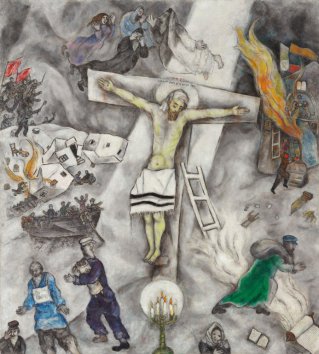
Night of Broken GlassI received the following linear presentation of verses from Pastor Kevin Parviz of the LC-MS congregation, Chai v’Shalom, in a small class-style discussion/presentation.  The verses were presented as they would arise within the natural flow of conversation about God with a Jew.  The premise if it can be setup in advance is that the Christian is known to be a Christian by the Jew and that the Christian agrees to only talk about God with the Jew using the Old Testament Scriptures without mentioning Jesus.  For the sake of getting better hits from Google searches, I used the name Old Testament in the title of this blog post, but in the conversation the Christian should use the term, Hebrew Scriptures (Tanakh).  The concept with this approach is that Jews won’t listen to talk about Jesus being God and they do find their texts authoritative (at least to some degree).


Starting Off Point

Many Jews have rejected God; they don’t even believe him.  Why?

The Holocaust.  If he’s real, or cares, he would have prevented such tragedy against his people.

Enter Isaiah 59:1-2:

“Behold, the LORD’S hand is not so short
That it cannot save;
Nor is His ear so dull
That it cannot hear.

But your iniquities have made a separation between you and your God,
And your sins have hidden His face from you so that He does not hear.”

The answer then is clear.  God can save.  But the reason there is a barrier between God and his people is their sins.

Jews usually don’t think they are sinners though – heck most of us don’t think along these lines.  We generally think we are good people, and we justify ourselves, which is what Jews will likely do after hearing this verse.  Think about it.  Most of us aren’t criminals!  Most of us haven’t had to go to prison.  In the realm of civil righteousness, we are typically good.

Regardless of sin, are you going to die?

Jews today often consider death to be the result of entropy, but that is not what the Prophets say.  The Prophets say it’s more than just natural decay.

Enter Ezekiel 18:1-4:

“The word of the Lord came to me:“What do you people mean by quoting this proverb about the land of Israel:

“‘The parents eat sour grapes, and the children’s teeth are set on edge’?

“As surely as I live, declares the Sovereign Lord, you will no longer quote this proverb in Israel. For everyone belongs to me, the parent as well as the child—both alike belong to me. The one who sins is the one who will die.”

This verse clearly states that God holds each individual responsible, so quit blaming your mom.  You will die because of your personal, actual sin.

So, what happens to you after you die?

Most Jews will say, “Nothing.”  You no longer exist.

If this is the case, then why do they do what they do as Jews, especially for the Orthodox?

The answer is to be remembered… they live on through the memory of the Jewish community.  How long does this last though?  Maybe four generations at best.  So this is far from eternal.

Enter Daniel 12:2

The prophet says that after death we all will be “awakened.”  The righteous to everlasting life and the wicked to everlasting contempt.

If this is true, how will you be judged?

Most Jews will say… probably I’ll be good.

Enter Isaiah 64:6

“All of us have become like one who is unclean, and all our righteous acts are like filthy rags; we all shrivel up like a leaf, and like the wind our sins sweep us away.”

Even our best is wretched.  And we will all die and our sins will remove us from the earth. We all fade to black.

At this point however, the Jew will likely point out if they are thinking it through, that Daniel said that some are righteous.

The answer then is that if our best is still sinful, this must mean that those that are righteous must have been forgiven and that those who are wicked, must have not been forgiven.

How are we forgiven?

Enter Leviticus 17:10-11

“And any man from the house of Israel, or from the aliens who sojourn among them, who eats any blood, I will set My face against that person who eats blood and will cut him off from among his people.‘For the life of the flesh is in the blood, and I have given it to you on the altar to make atonement for your souls; for it is the blood by reason of the life that makes atonement.”

The answer is atonement.

The Jews will then point to their Day of Atonement.  Since they no longer have the priesthood or the temple, the instructions for the Day of Atonement in Leviticus 16 cannot be followed, but Jews today fast on this day and pray for forgiveness.

But fasting and prayers are deeds, and Isaiah says that even our good deeds are like filthy rags.

Nowhere in the prophets does it say that our good deeds merit us forgiveness of sins.

Enter Jeremiah 31:31-34

“Behold, days are coming,” declares the LORD, “when I will make a new covenant with the house of Israel and with the house of Judah, not like the covenant which I made with their fathers in the day I took them by the hand to bring them out of the land of Egypt, My covenant which they broke, although I was a husband to them,” declares the LORD. “But this is the covenant which I will make with the house of Israel after those days,” declares the LORD, “I will put My law within them and on their heart I will write it; and I will be their God, and they shall be My people. “They will not teach again, each man his neighbor and each man his brother, saying, ‘Know the LORD,’ for they will all know Me, from the least of them to the greatest of them,” declares the LORD, “for I will forgive their iniquity, and their sin I will remember no more.”

Here we see that the new covenant God will make will replace the Mosaic covenant.  We just read from the Mosaic covenant in Leviticus 17.  Even in Jeremiah’s time, the Jews broke that covenant.  Now, Jews don’t even have a temple.

Enter Isaiah 52:13-53:12

Once you read this, they will say it is about Jesus!

They invoked the name of Jesus, not you.

In this passage you find the forgiveness of sins come through the “Suffering Servant” of the Lord who bears the iniquities of all people.

The Jew will likely not have an immediate conversion at this point, but it’s recommended to give them a list of these verses to read over to verify by reading them in context.  This will likely be the first time they’ve heard these verses.  Like most American homes who have many Bibles that are never opened and read, the same is for many Jewish homes that have Hebrew Scriptures.  The Jew who first encounters these verses will likely want to read more and talk more and take time to consider the message of forgiveness from God that was just received from the Hebrew Scriptures.

Augustine – The Church in the World

Excerpts from Augustine’s The City of God, taken from New Advent:

Book 18, Chapter 49

“In this wicked world, in these evil days, when the Church measures her future loftiness by her present humility, and is exercised by goading fears, tormenting sorrows, disquieting labors, and dangerous temptations, when she soberly rejoices, rejoicing only in hope, there are many reprobate mingled with the good, and both are gathered together by the gospel as in a drag net; (Matthew 13:47-50) and in this world, as in a sea, both swim enclosed without distinction in the net, until it is brought ashore, when the wicked must be separated from the good, that in the good, as in His temple, God may be all in all.”

Book 18, Chapter 51

“Thus in this world, in these evil days, not only from the time of the bodily presence of Christ and His apostles, but even from that of Abel, whom first his wicked brother slew because he was righteous, (1 John 3:12) and thenceforth even to the end of this world, the Church has gone forward on pilgrimage amid the persecutions of the world and the consolations of God.”

Quotes in my analysis below of these two brief excerpts come from the translation found in Readings in Christian Thought edited by Hugh T. Kerr.

Christians Thrown to the Lions.jpg


Augustine of Hippo stands as one of the greatest theologians of all time.  His works are still appealed to as an authority in both Roman Catholic and Protestant tradition on numerous and diverse subjects across two-hundred and thirty-two works.  From Augustine’s Confessions, we learn of his conversion from paganism to Christianity after living a life of grandiose sinful indulgences in his thirties.  Born in 354 AD, he lived through the roughly last fifty years of the Roman Empire’s existence, the first half being a pagan, and the second half being a Christian.  Augustine lived roughly another quarter of a century after the fall of Rome in 410 AD.  His mother was a Christian and his father was a pagan until his deathbed. This life experience deposits him into an advantageous position of first-hand familiarity with the mind of both the pagan and Christian, in a world where Christianity is the religion of the State and in which it is not.  After the fall of Rome, Christians received the blame for the end of the Roman Empire and the calamity and suffering that followed.  To comfort Christians, as well as to defend against such blame, Augustine wrote The City of God, drawing from his well-spring of knowledge of the inner workings of both the pagan and Christian worldviews as he wrote, to demonstrate the tension, even battle, between the kingdoms of man that continually rise and fall and the eternal kingdom of God that forever stands.

In the above excerpt from The City of God, Augustine writes with the purpose to remind Christians that the world is not their friend.  Despite the appearance of it for a time when Constantine Christianized the Roman Empire, the days are evil, and Augustine argues that this is to the Church’s benefit, because Augustine writes, “through the lowliness she now endures is winning the sublime station she is to have in heaven.” He justifies this position with two key points: a summary of Paul’s words in Romans 5 on the fruit born through suffering and an appeal to the historical suffering of God’s righteous people.  Like Paul, Augustine argues that suffering produces a deep-seated joy in the hope to come and a willingness to wait out the evil days until Christ separates his own from the children of the devil.  To keep the Church from getting too near sighted, thinking their current plight is unique to them, he reminds them that the apostles and the Church fathers suffered before Constantine made Christianity the religion of the State and that in fact God’s people have always agonized under the oppression of evil men, tracing all the way back to the beginning of man, when righteous Abel was murdered by his wicked brother, Cain.  Augustine concludes that as it was in the beginning with Abel, it will continue to be until the end of this age.

Underlying the purpose of his writing to remind his Christian readers that cities of men inevitably fall but God’s city will always remain is the question, “What then shall we do?”  With the evidence and reasoning Augustine provided, the answer appears to be nothing but a single answer – what Jesus said to the seven churches of Revelation – “Stand firm until the end.”  This single answer is to give the Christian the necessary knowledge to live in sight of better things to come, to not be attached to the world that certainly will end in fire and destruction at Christ’s return – to pull one’s head out of the “now” and to hope in the “not yet” reality of the City of God.  There are of course many activities the Christian can be pursuing in this world of woe: loving God, serving one’s neighbor, helping the poor and widowed, comforting those who mourn, being a voice for the voiceless, speaking the Gospel to all in his life, and etc., but the knowledge gleaned from Augustine’s answer is that none of these activities will put an end to suffering.  They might lead to a relative life of ease if the work of the Church through the Gospel and the Sacraments wins over the State as what had occurred with Constantine and Rome, but such peace won’t last, because it’s only given when the City of Man adopts the veneer of the City of God.

I thought this small, two paragraph excerpt from The City of God provided great insight for today’s Church in America (potentially the West as a whole, but particularly the American Church).  From personal experience, I have heard many, Americans and non-Americans, express the notion that America was founded on Christian values and liberties, going so far to say that America is a “Christian nation.”  Many of these same people argue that America has fallen from these traditional Christian values, often times using the term, “Post-Christian,” to describe the nation.  I read an article a few years ago by a LC-MS pastor about the shift Christians have experienced in America from being a people of “privilege” due to their religious majority to now being a people “unprivilege.”  In many ways, the City of God veneer has stripped away from the City of Man in America, and the Church is now seen as a resistance, a stumbling block to the progress the City of Man wants to make in the realms of sexual identity and activity, abortion on demand, religious syncretism, socialized programs that put more trust and power in the City of Man than in God and the love of one’s neighbor to help out in times of need, and even science because of the common Christian rejection of Darwinian Evolution.  Augustine reminds us too – this is nothing new.  It’s always been.

In America, we have excesses in material wealth and luxuries in comfort that many in the world cannot even comprehend.  Our extravagances can lead us to be attached to this world, to love the City of Man, in a way that others with less wealth might not be tempted to cling.  I lived one summer in a Mexican town that had no running water, no washer and dryers, no water heaters, now showers, just outhouses, no pavement, just dirt.  It’s common for Americans to come back from such locales and say, “But they were so happy.”  That was my experience too.  They weren’t so attached to the City of Man, and many of the people I interacted with were members of the City of God.  Their hope was in the life to come; not having their best life now.  Augustine’s writing was a wake-up call for me; to not grow fat and lazy; hard times will come.  His use of Abel being slain by his ungodly brother is what shook me.  I have read that historical narrative to be an example of the damaging effects of sin in the world; not the pitting of war between God’s people and the devil’s as Augustine framed it.  It reminded me that there is a war between two cities raging on and that I really should adjust and align myself not so much as an American-Christian, seeking to Make America Christian Again, but as a Christian who is a wayfarer in this world of woe, awaiting my Lord to bring me home.